Table of Contents
ToggleEnsuring Safety in Subway and Underground Spaces
Subway tunnels, underground stations, and transit hubs face unique fire safety challenges. Limited exits, high passenger density, and complex ventilation systems make fire and smoke control critical.
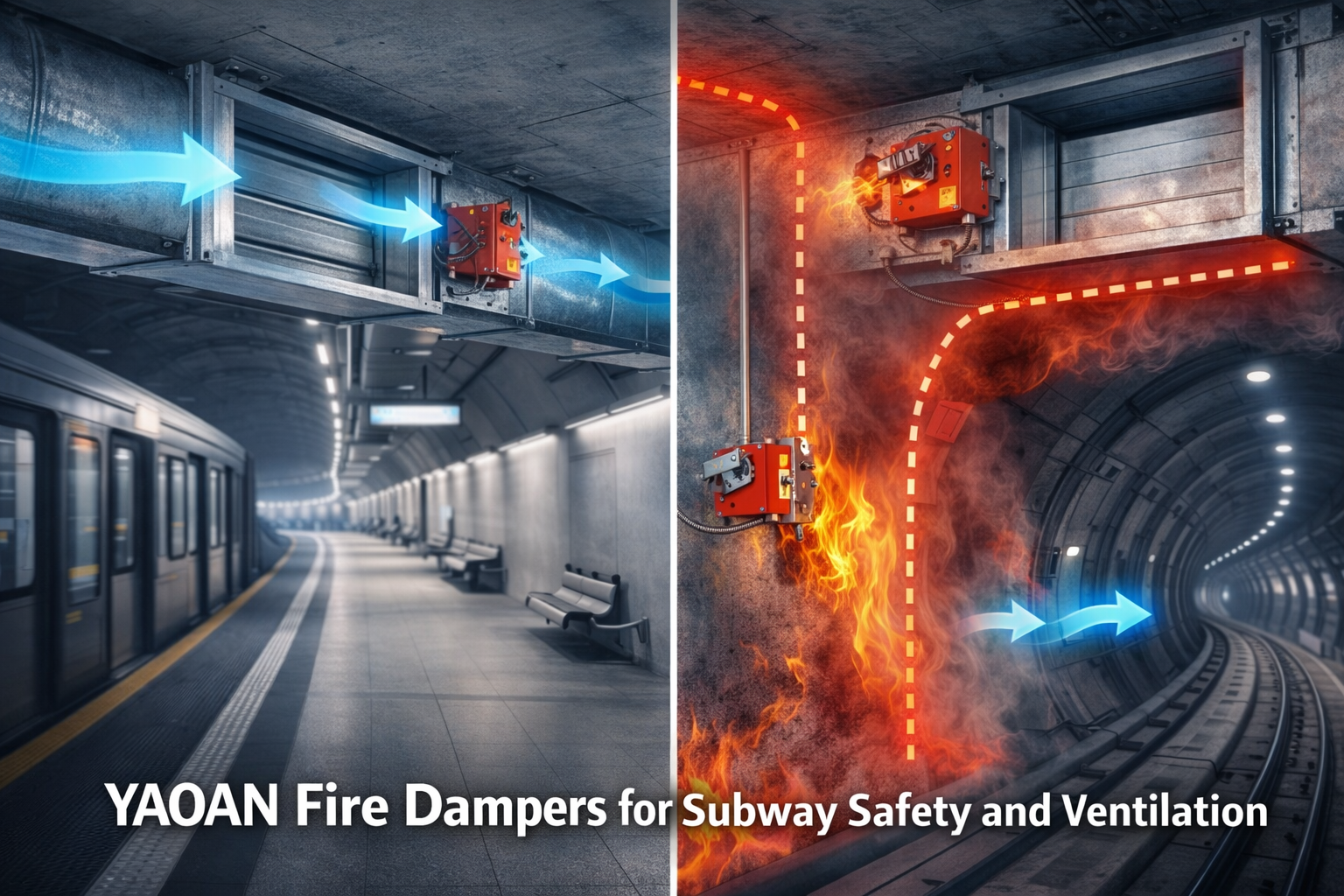
YAOAN Fire Dampers are engineered to automatically seal ducts and air pathways in the event of fire, preventing smoke and flame spread while maintaining normal airflow during safe conditions. These solutions are essential for protecting passengers, staff, and infrastructure in subway systems.
H2: How YAOAN Fire Dampers Work in Transit Systems
H3: Automatic Heat-Activated Closure
YAOAN dampers use thermal elements or fusible links that trigger at specified temperatures:
- Damper blades close to seal tunnel or station ducts
- Smoke and flames are contained in designated zones
- Compliance with international fire standards ensures safe evacuation
H3: Flexible Installation for Underground HVAC
YAOAN dampers fit a variety of underground ventilation layouts:
- Horizontal, vertical, or sloped ducts
- Station platforms, tunnels, and emergency ventilation shafts
- Easy access for inspection and maintenance
H2: Applications in Subway Systems
H3: Tunnel Fire Containment
In tunnels, YAOAN fire dampers:
- Prevent fire and smoke from traveling long tunnel sections
- Protect evacuation corridors and cross-passages
- Integrate with longitudinal ventilation fans for emergency smoke extraction
H3: Station Platforms and Ventilation Shafts
In stations, dampers:
- Isolate smoke from public concourses and exits
- Work with emergency exhaust systems and smoke extraction shafts
- Maintain normal airflow under routine operation
H2: Key Performance Considerations
H3: Temperature Rating and Airflow Capacity
When designing subway fire protection, engineers consider:
- Maximum activation temperature to ensure timely closure
- Duct size and airflow volumes for subway ventilation systems
- Fire-resistance duration (commonly 1–3 hours)
H3: Pressure Drop and Noise Impact
Though focused on safety, dampers must not disrupt routine ventilation:
- Evaluate static pressure drop across the damper at operating airflow
- Confirm noise levels are within acceptable passenger comfort ranges
H3: Integration with Smoke and HVAC Controls
YAOAN dampers coordinate with:
- Tunnel and station smoke detection systems
- Longitudinal and transverse ventilation fans
- Centralized building or transit control systems
H2: Design and Maintenance Best Practices
H3: Aligning Fire Dampers with Transit Layout
- Identify tunnels, cross-passages, and high-risk zones
- Ensure dampers isolate fire zones without compromising normal airflow
- Maintain clear evacuation paths for passengers and staff
H3: Compliance and Safety Standards
- UL, EN, NFPA, and local transit authority tested
- Integration with emergency alarms and automatic smoke extraction
- Seasonal and emergency operational planning
H3: Long-Term Reliability
- Safe access for inspection and maintenance
- Durable operation over decades
- Accurate documentation for safety audits
H2: FAQ
Q1: What is a fire damper in a subway system?
A fire damper in transit ducts prevents fire and smoke from spreading through tunnels and stations. It closes automatically when triggered by heat.
Q2: Why are fire dampers critical in subway tunnels?
They isolate fire zones, protect evacuation routes, and prevent smoke from reaching passenger areas.
Q3: Do YAOAN subway fire dampers affect normal ventilation?
No. Dampers remain open under standard conditions, maintaining airflow while ensuring safety in emergencies.
Q4: Can YAOAN dampers integrate with station smoke control?
Yes. They work with fans, exhaust shafts, and emergency HVAC controls for coordinated smoke management.
H2: About YAOAN Ventilation
YAOAN Ventilation has nearly 30 years of experience providing airflow and fire safety solutions. Since 1996, YAOAN has supplied industrial-grade fire dampers, fans, smoke-control components, and precision ventilation systems for underground transit, high-rise buildings, and industrial facilities.
Through careful damper selection and system design, YAOAN ensures subway systems maintain efficient ventilation while meeting the highest fire safety standards, supporting safe evacuation and reliable performance.