Table of Contents
ToggleIntroduction: Wind Challenges in Tall Buildings
Skyscrapers face unique wind pressures that influence HVAC system performance:
- High-rise buildings experience varying external pressures along the façade
- Pressure differences can affect airflow through ductwork and diffusers
- Proper system design is critical to maintain comfort and energy efficiency
HVAC engineers must account for stack effect, wind-driven infiltration, and duct leakage to ensure stable operation.
Effects of Wind Pressure on HVAC Systems
Stack Effect and Vertical Air Movement
- Warm air rises, creating a pressure difference between lower and upper floors
- Can lead to uncontrolled airflow, uneven temperatures, and increased energy use
- Requires zoned air handling and balanced supply/return systems
Wind-Driven Infiltration
- High winds push and pull air through façade openings and cracks
- Can cause pressure imbalance, drafts, or short-circuiting of air systems
- Proper pressure-relief dampers and façade sealing mitigate these effects
Ductwork Considerations
- Long vertical risers face increased friction losses and variable static pressure
- Fans must be sized for worst-case wind load conditions
- Variable Air Volume (VAV) and pressure-independent controls help maintain steady airflow
Design Strategies for High-Rise HVAC
Pressure Zoning and Control
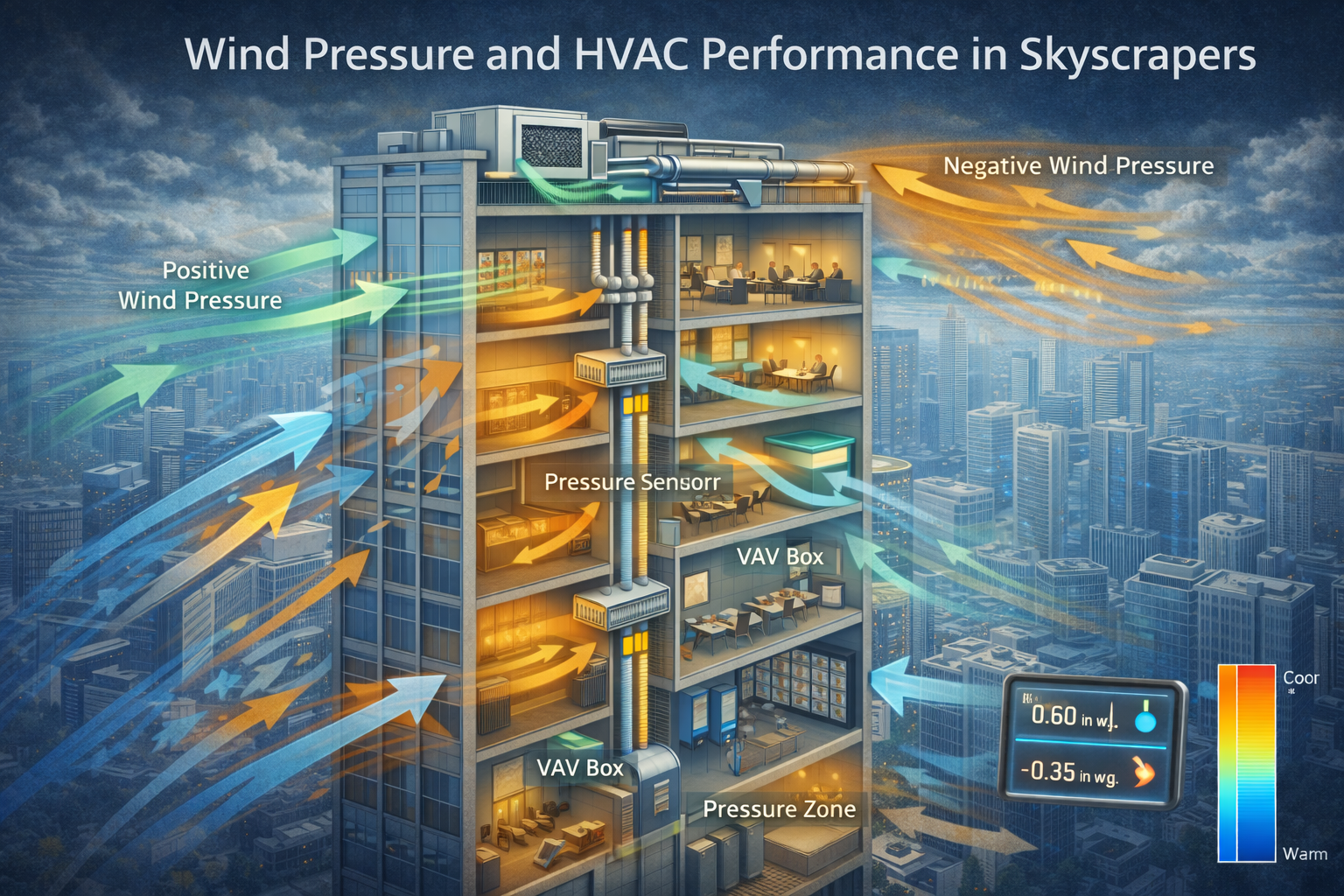
- Divide building into pressure zones to minimize the impact of wind and stack effect
- Use pressure sensors and control dampers to stabilize airflow in real-time
Wind-Resistant Diffusers and VAV Boxes
- Install diffusers and VAV boxes designed for high-rise wind load tolerance
- Ensure proper throw and mixing at upper floors despite pressure variations
Building Automation and Monitoring
- Continuous monitoring of pressure, airflow, and temperature
- Automated adjustments to fan speed and damper positions improve energy efficiency and comfort
- Detect and respond to wind-driven anomalies in real time
Compliance and Safety Standards
High-rise HVAC systems must meet:
- ASHRAE Standard 62.1 for indoor air quality
- NFPA and EN standards for fire and smoke control
- Local tall-building regulations and wind load requirements
Image Reference (for Blog Integration)
Image Alt Text:
Skyscraper HVAC system showing airflow distribution, wind pressure effects, VAV boxes, and pressure sensors.
Image Title:
Wind Pressure and HVAC Performance in Skyscrapers
Conclusion: Balancing Airflow, Pressure, and Comfort
Wind pressure significantly impacts airflow distribution and energy use in skyscrapers.
Key strategies include:
- Pressure zoning and automated controls
- Wind-resistant diffusers and VAV systems
- Continuous monitoring for optimal performance
Proper tall-building HVAC design ensures comfort, safety, and efficiency, even under extreme wind conditions.
FAQ – Skyscraper HVAC and Wind Pressure
How does wind pressure affect tall building HVAC?
It can create uneven airflow, pressure imbalances, and energy inefficiency if not accounted for in design.
What design strategies help mitigate wind impact?
Pressure zoning, VAV/pressure-independent controls, wind-resistant diffusers, and building automation systems.
Are there specific standards for high-rise HVAC wind control?
Yes, including ASHRAE 62.1 for air quality, NFPA for safety, and local building codes for wind load compliance.