Table of Contents
ToggleDuct Fans as In-Line Boosters in HVAC Systems
Most HVAC systems rely on central fans in air-handling units. In long duct runs, deep car parks, or retrofit corridors, that central pressure sometimes cannot reach every grille. Duct fans—also called in-line fans—sit directly inside the duct to boost airflow exactly where the system needs help.
They offer a compact way to reinforce AIRFLOW CONTROL without rebuilding main plantrooms or shafts.
How a Duct Fan Works Inside the Duct
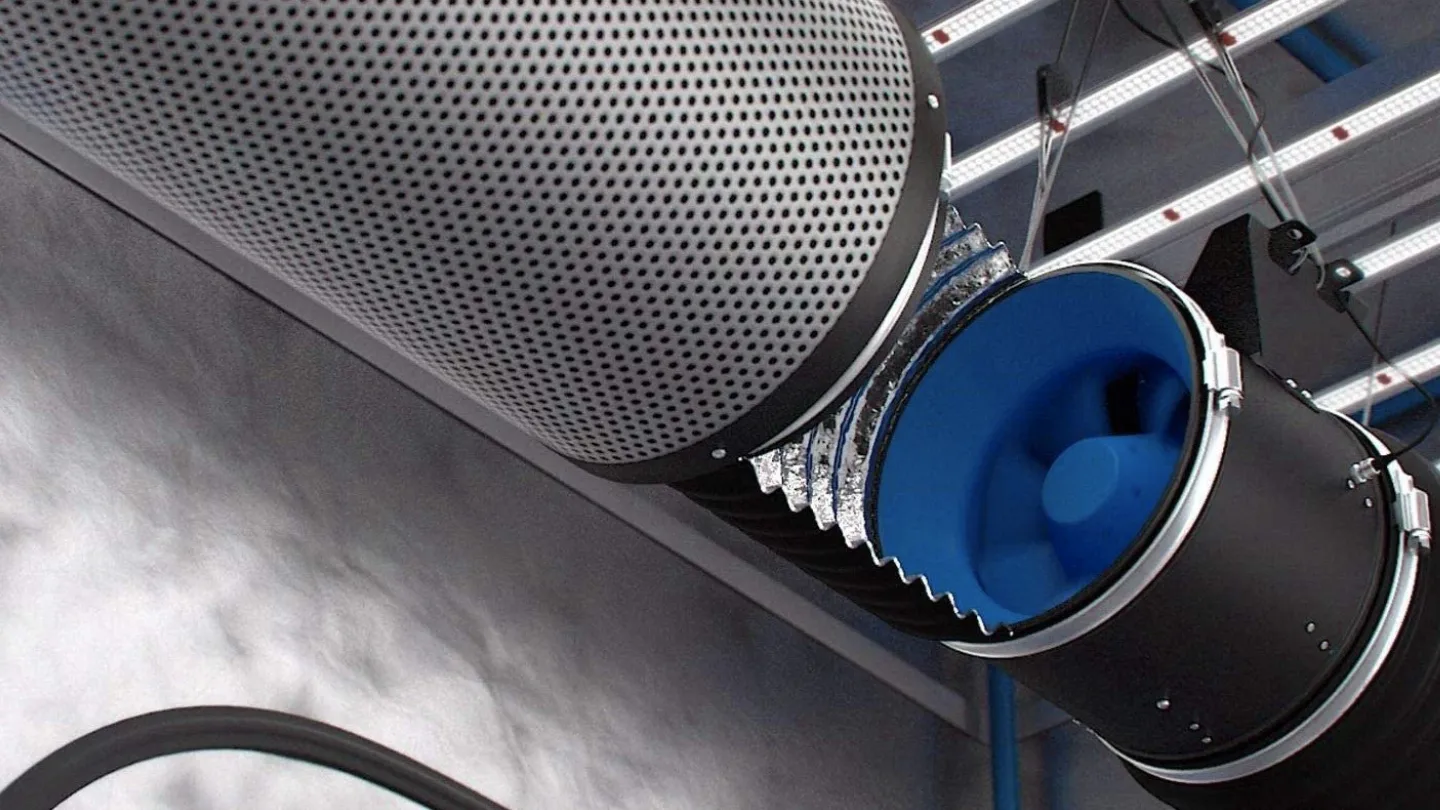
A duct fan mounts within a round or rectangular duct section. Air enters axially, passes through the impeller, and exits back into the same duct line. The fan:
- Adds pressure to overcome friction and fittings downstream.
- Stabilizes flow in branches with high resistance.
- Helps achieve target air changes in remote zones.
Because it lives inside the duct, casing shape, connection details, and maintenance access must all match the duct construction.
Common Types of Duct Fans
Inline axial duct fans
Inline axial units use axial impellers in a cylindrical housing. They:
- Fit directly in circular ducts.
- Offer high airflow at relatively low pressure.
- Suit simple supply or extract runs with modest resistance.
They work well for short boosts, such as restroom exhaust or local branch reinforcement, where noise limits stay moderate.
Inline centrifugal duct fans
Inline centrifugal fans place a small scroll or centrifugal wheel inside a casing. They:
- Develop higher static pressure than many small axial units.
- Handle more fittings, filters, or longer branches.
- Often include side discharge or special spigot arrangements.
These fans support sections where duct geometry or components create higher pressure drops.
Mixed-flow duct fans
Mixed-flow fans combine axial and centrifugal characteristics. Their impellers:
- Deliver higher pressure than axial fans at comparable size.
- Maintain smoother noise profiles and good efficiency.
- Fit naturally in round ducts as compact, high-performance boosters.
For modern projects, mixed-flow duct fans often provide the best balance between footprint, pressure capability, and acoustic behavior.
Where Duct Fans Add Real System Value
Boosting long branches and remote zones
In large buildings, some branches serve distant rooms or back-of-house areas. After construction changes and tenant fit-outs, those branches may struggle to reach design airflow. A duct fan can:
- Raise local pressure without resizing upstream ductwork.
- Restore airflow to under-served rooms.
- Support zoning upgrades when central plant remains unchanged.
Correct control strategies keep these boosters coordinated with main fans and dampers.
Car parks, corridors, and retrofit work
Duct fans also help in:
- Car parks that need sectional extract or make-up air without full fan rooms in each zone.
- Long service corridors where small AHUs would waste space.
- Retrofit projects where existing fans stay, but new ducts extend further than first planned.
In each case, designers use duct fans to shape flow and pressure locally while central fans handle the bulk duty.
Design Considerations for Duct Fans
Sizing for flow and pressure
Selection must start from:
- Required airflow through the section.
- Additional pressure drop the fan must overcome.
- Total system curve, including central fans, filters, and dampers.
Oversized duct fans can create noise, draft, and balancing problems. Undersized units run at high load and fail to correct distribution issues.
Location and airflow quality
Duct fan performance depends on inlet and outlet conditions. Good practice:
- Provide straight duct lengths before and after the fan where space allows.
- Avoid immediate elbows, transitions, or branches at the spigots.
- Allow access space around the casing for inspection and removal.
These details help maintain stable flow, protect bearings, and keep measured performance close to catalog data.
Noise and vibration
Any fan adds sound to the system. Designers manage this by:
- Selecting lower-speed or mixed-flow units for sensitive areas.
- Positioning fans away from noise-critical rooms.
- Using flexible connections and appropriate supports to reduce structure-borne vibration.
Where necessary, duct silencers or lined sections complement the duct fan to stay within project acoustic targets.
Controls and operation
Duct fans integrate with wider control schemes:
- On/off control from local thermostats or air-quality sensors.
- Speed control via VFDs for variable-load zones.
- Interlocks with main AHU fans and dampers to avoid unwanted recirculation paths.
Clear sequences in control drawings and O&M manuals keep AIRFLOW CONTROL consistent across all modes, including night setback and smoke-control logic where applicable.
FAQ
What is the purpose of a duct fan?
A duct fan boosts airflow inside an existing duct system. It raises local pressure so air can travel through long runs, tight fittings, or added branches, helping maintain design airflow rates in remote or high-resistance parts of the HVAC system.
How do ducted fans work?
Ducted fans place an impeller inside a casing that matches the duct. As the impeller turns, it accelerates air and adds pressure. The surrounding duct guides that air to the next section, and the fan’s thrust and pressure gain help overcome system resistance downstream.
What is the difference between duct fan and exhaust fan?
An exhaust fan usually serves as a terminal device that pulls air from a space to outdoors. A duct fan sits inside a duct line and may assist supply, return, or exhaust flows. It acts as an in-line booster rather than the only air-moving device in the system.
What is the purpose of a duct?
A duct provides a defined path for air to travel between equipment and rooms. It carries supply, return, or exhaust air so the HVAC system can deliver and collect air where needed while controlling pressure, velocity, and losses along the route.
Are duct fans worth it?
Duct fans provide strong value when a specific branch or zone lacks airflow and duct or fan replacement would be disruptive or costly. When selected and controlled correctly, they restore performance with less structural change than rebuilding main fans or shafts.
Can a duct fan run continuously?
Many duct fans are designed for continuous operation, provided selection matches temperature, duty, and maintenance plans. Designers and operators still need to consider energy use, filter cleanliness, and bearing care when planning round-the-clock operation.
Which type of fan is best for cooling?
For space cooling, the best fan type depends on layout and resistance. Central AHUs often use centrifugal fans, while duct fans and inline mixed-flow units support specific branches. In open areas, axial or jet fans move large air volumes. The correct choice comes from airflow, pressure, and system design, not a single “best” fan.
About YAOAN VENTILATION
YAOAN VENTILATION delivers optimized air and airflow management solutions backed by nearly three decades of engineering experience. Since 1996, we have focused on industrial-grade ventilation and fire protection systems for commercial buildings, infrastructure, and specialized environments. Our portfolio includes inline axial, centrifugal, and mixed-flow duct fans alongside main fans, dampers, smoke-control components, silencers, and precision-built aluminum duct accessories. By integrating duct fans thoughtfully into overall system design, YAOAN VENTILATION helps projects correct pressure imbalances, stabilize AIRFLOW CONTROL, and extend the performance of existing HVAC infrastructure throughout the building life cycle.