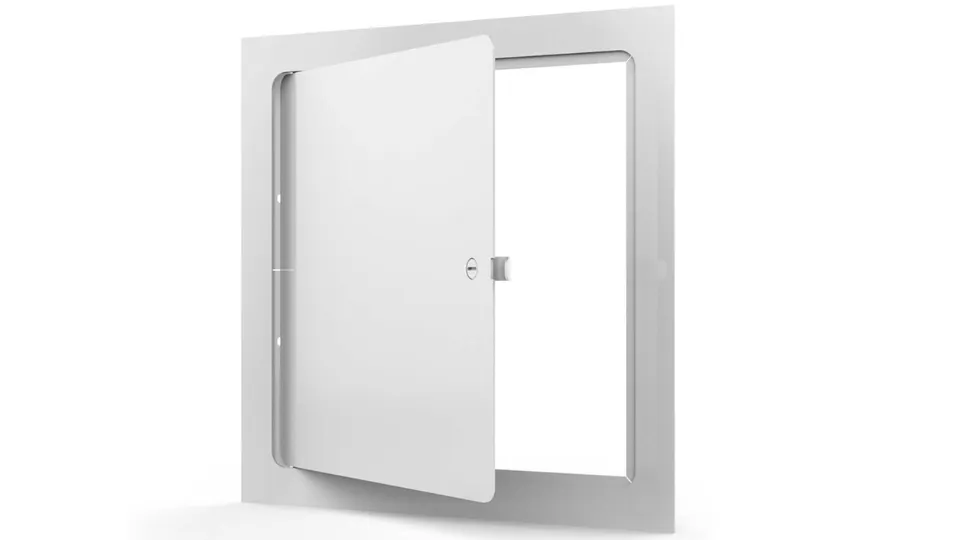
Access Doors Along the HVAC Lifecycle
In an HVAC project, many critical components sit out of sight. Fire dampers, smoke control devices, balancing dampers, and filters often hide above ceilings or inside shafts.
Access doors give technicians a defined, repeatable way to reach those components throughout the building’s life. Without planned access, even well-designed systems become difficult to inspect, clean, or repair, which increases risk for both FIRE SAFETY and AIRFLOW CONTROL.
From design through operation, access doors support:
- Commissioning and functional testing
- Routine inspection and cleaning
- Corrective work after alarms or failures
- Future upgrades or rerouting of duct branches
They form a small but essential part of a maintainable HVAC system.
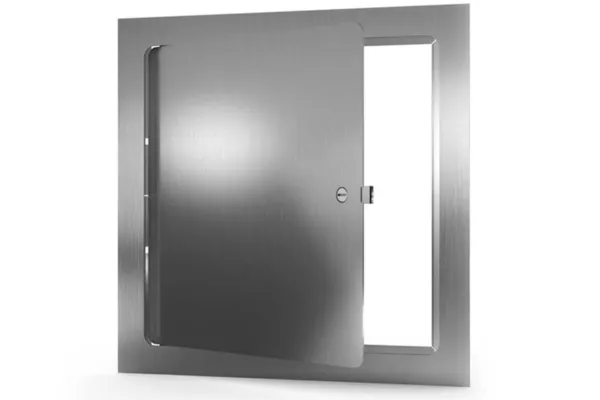
Where Access Doors Belong in Ductwork and Equipment
Service points inside duct systems
Duct-mounted access doors usually appear wherever a technician must reach internal hardware or surfaces, such as:
- Fire and smoke dampers located inside shafts or walls
- Backdraft dampers and opposed-blade volume control dampers
- Coils, filters, and sound attenuators in large plenums or cabinets
- Internal joints that may need inspection after pressure testing
These openings reduce the temptation to cut the duct later, which protects system tightness and keeps leakage under control.
Access around fire-rated barriers
When ductwork crosses a fire-rated wall or slab, the design often includes fire dampers and firestopping. Access doors then appear on the duct or the adjacent wall so crews can:
- Inspect damper blades and linkages
- Reset devices after a test or alarm
- Confirm that firestopping and sleeves remain intact
In these locations, fire-rated access doors or rated wall/ceiling panels help maintain the barrier’s integrity while still allowing necessary access.
Access in finished ceilings and walls
In occupied spaces, access panels and doors give a clean way to reach:
- Control valves, balancing devices, and sensors
- Small fan units or terminal boxes
- Junction boxes and local control modules related to HVAC
Architects often prefer low-visibility or paintable panels, but the underlying requirement stays the same: technicians must be able to open the panel, reach the device, and work safely without dismantling large portions of the ceiling.
Materials, Construction, and Performance Factors
Access doors must tolerate the same conditions as the surrounding system. Material and construction choices affect both durability and performance.
Common materials in HVAC access doors
- Galvanized steel
Widely used for duct access doors and many shaft doors. It offers strength, impact resistance, and basic corrosion protection. - Aluminum
Lighter and corrosion-resistant. Often used where weight is a concern or where clean, non-rusting surfaces are important. - Stainless steel
Selected for aggressive or hygienic environments, such as food processing areas, coastal projects, or some healthcare applications.
Insulated doors reduce condensation and limit thermal bridging. Gaskets around the leaf improve airtightness and help maintain system efficiency.
Performance expectations
Engineers and contractors evaluate access doors on:
- Air leakage characteristics and gasket quality
- Compatibility with duct insulation thickness and cladding
- Fire rating where the door penetrates a fire-resistance–rated assembly
- Hardware durability, especially for high-use doors in plantrooms and shafts
A door that leaks heavily or warps under temperature changes can undermine the performance gains from high-quality ductwork and dampers.
Installation Practices and Coordination in HVAC Projects
Planning access locations on drawings
Good access starts at the design desk. During coordination, the team should:
- Mark access doors on HVAC drawings with clear symbols and tags
- Check that structural elements and cable trays do not block access zones
- Align access door positions with the fire-damper schedule and life-safety strategy
- Coordinate with architectural ceiling layouts so panels align with grids or joints
This planning stage helps avoid “invisible” dampers and devices that no one can reach once finishes go in.
Field installation checkpoints
On site, supervisors and QA staff can use simple checks:
- Confirm that the opening size suits the component and the tools technicians will use
- Verify that hinges, latches, and gaskets seat correctly and close without forcing
- Check that insulation returns cleanly to the door frame to prevent thermal bridges and condensation
- For rated doors, ensure installation follows the tested detail (frame type, fasteners, and clearances)
After installation, each access door should be labeled so technicians can match openings to the devices listed on drawings, inspection logs, or BAS graphics.
FAQ
What is an access door?
An access door is a framed opening with a hinged or removable leaf that lets people reach hidden services. In HVAC systems, it appears on ducts, walls, and ceilings so technicians can inspect and maintain dampers, valves, filters, and other components without cutting into finishes or ductwork.
What is the meaning of access door?
The term “access door” refers to a small, purpose-built door that provides controlled entry to a concealed area or service point. It balances ease of entry for authorized staff with structural, fire, acoustic, and aesthetic requirements in the surrounding assembly.
What are the different types of access doors?
Typical types include duct access doors, fire-rated shaft or wall access doors, ceiling and wall access panels, and specialized doors for tile ceilings or wet areas. Each type uses materials and hardware suited to its task, such as insulated steel for fire-rated shafts or low-profile panels for finished interiors.
What is the difference between an access door and a panel?
An access door usually acts like a small door, with frame, hinges, and a latch. An access panel may be a simpler removable or lift-out piece that relies on clips or touch-latch hardware. In practice, many products combine the two ideas, and specifications define whether a hinge, rating, or specific hardware is required.
What are the 4 types of access control?
In security terminology, four common access control models include discretionary access control, mandatory access control, role-based access control, and rule- or attribute-based access control. Physical door access systems apply these concepts when they decide which users or roles can unlock particular doors under defined conditions.
How much does it cost to install an access door?
Cost depends on size, rating, material, and the construction type around the opening. A small non-rated panel in gypsum board usually costs far less than a large fire-rated shaft door in a concrete wall. Labor for cutting, framing, finishing, and sealing also influences price, so contractors typically price installations based on project drawings and standards.
Which door is better, PVC or WPC?
PVC doors offer strong moisture resistance and low weight, which suits some interior and wet-area uses. WPC (wood-plastic composite) doors provide better stiffness and screw-holding capacity with a more wood-like feel. The better option depends on the location, exposure to water or impact, appearance requirements, and applicable fire or building codes.
What is a door without panels called?
A door without raised or recessed panels is commonly called a flush door. It has a flat surface on both sides over a solid or hollow core. Flush doors appear frequently in modern interiors and service areas where a simple, easy-to-clean surface is more important than decorative profiling.
How to install an access panel door?
To install an access panel, mark and cut the opening according to the manufacturer’s dimensions, provide any required framing, then fix the frame securely with suitable fasteners. Check that the panel opens and closes freely, aligns with the finished surface, and seals as intended. In fire-rated assemblies, follow the tested installation details exactly to maintain the rating.
How does a door access system work?
A door access system uses readers, credentials, and a controller to manage who can enter through a door. When a user presents a card, code, or biometric identifier, the controller checks permissions and releases the lock if access is allowed. The system can log events and integrate with building management or alarm systems for monitoring and response.
About YAOAN VENTILATION
YAOAN VENTILATION delivers optimized air and airflow management solutions backed by nearly three decades of engineering experience. Since 1996, we have focused on industrial-grade ventilation and fire protection systems for commercial buildings, infrastructure, and specialized environments. Our portfolio includes fans, fire dampers, smoke control components, silencers, and precision-built aluminum ventilation parts, as well as compatible access solutions that support safe inspection of critical devices. By combining durable hardware with thoughtful access planning, YAOAN VENTILATION helps projects maintain code compliance, protect life safety components, and keep HVAC systems serviceable throughout their life cycle.