Table of Contents
ToggleIntroduction: Unique HVAC Challenges in Cinemas and Theaters
Cinemas and theaters are enclosed, high-occupancy spaces where air quality, temperature control, and noise management are critical:
- Patrons require comfortable temperature and humidity throughout the performance
- Airflow must maintain fresh air distribution without drafts
- Acoustic performance must avoid HVAC noise interfering with soundtracks or live performances
- Compliance with local building and ventilation codes is essential
Specialized ventilation solutions balance air quality, energy efficiency, and acoustic comfort.
Core Ventilation Requirements
High Occupancy Air Distribution
- Large auditoriums require even supply air distribution
- Avoid dead zones and hotspots through carefully positioned diffusers
- Consider tiered seating airflow modeling to maintain comfort in all rows
Noise-Sensitive HVAC Components
- Supply fans, AHUs, and ductwork must minimize audible noise
- Use silencers, acoustic duct liners, and vibration isolation to prevent disruption
- Low-velocity diffusers in ceilings reduce drafts and turbulent noise
Filtration and Air Quality Control
- High occupancy increases CO2 and particulate load
- Use HEPA or MERV-13 filters to maintain indoor air quality
- Consider demand-controlled ventilation (DCV) to adjust airflow based on occupancy sensors
Strategies for Cinema and Theater HVAC Design
Zoning and Airflow Management
- Separate HVAC zones for auditoriums, lobbies, and projection rooms
- Ensure pressure differentials to prevent cross-contamination of air
- Tailor airflow rates to match occupancy density and heat loads
Integration with Acoustic Design
- Use low-noise diffusers and supply vents
- Isolate AHUs and fans from the main structure using vibration mounts
- Maintain sound isolation between mechanical rooms and auditoriums
Energy Efficiency Considerations
- Combine VAV systems and DCV to reduce energy use during low occupancy
- Optimize duct routing to minimize pressure drops and fan energy
- Use smart controls for scheduling ventilation based on showtimes
Compliance and Standards
HVAC systems for entertainment venues must meet:
- ASHRAE Standards for Indoor Air Quality (IAQ) and Thermal Comfort
- Local fire, smoke, and safety codes
- Acoustic performance criteria for public auditoriums
Image Reference (for Blog Integration)
Image Alt Text:
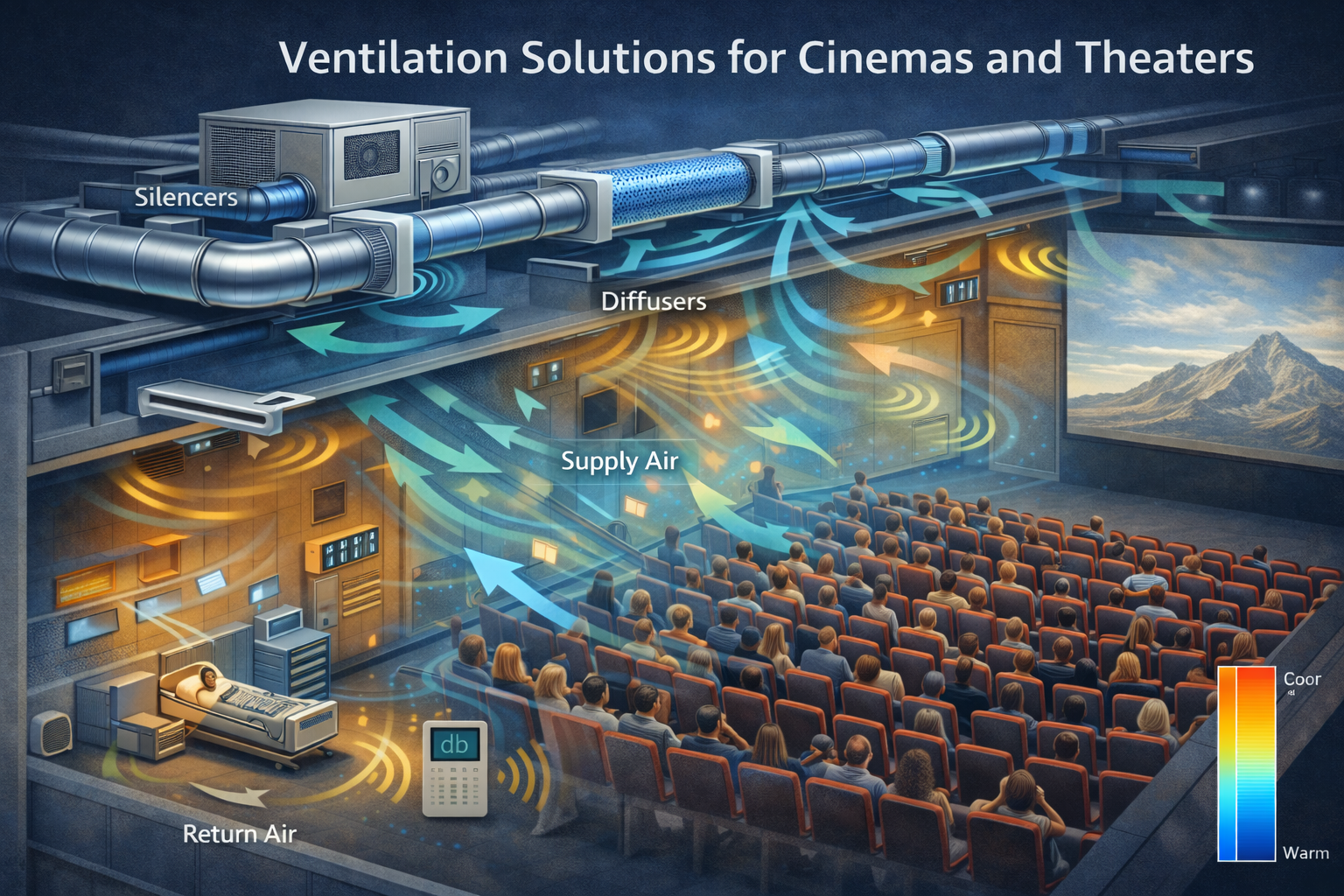
Cinema and theater HVAC ventilation system showing diffusers, airflow paths, and acoustic silencers.
Image Title:
Ventilation Solutions for Cinemas and Theaters
Conclusion: Comfort and Experience Go Hand in Hand
Proper HVAC design in cinemas and theaters ensures:
- Comfortable temperature and airflow for all occupants
- High indoor air quality with effective filtration
- Minimal acoustic interference with performances
- Compliance with safety and building regulations
Integrating airflow, energy efficiency, and acoustic performance from the early design stage is essential for a successful entertainment venue.
FAQ – Cinema & Theater HVAC Solutions
What are the main HVAC challenges in cinemas and theaters?
High occupancy, noise sensitivity, uneven airflow, and indoor air quality are the primary challenges.
How can HVAC noise be minimized in auditoriums?
Use silencers, acoustic duct liners, vibration-isolated AHUs, and low-velocity diffusers.
Are there energy-saving strategies for theaters?
Yes, implement VAV systems, demand-controlled ventilation (DCV), and smart scheduling controls.
What filtration standards are recommended for high-occupancy spaces?
HEPA or MERV-13 filters are recommended to maintain good indoor air quality and reduce particulate exposure.