Table of Contents
ToggleIntroduction
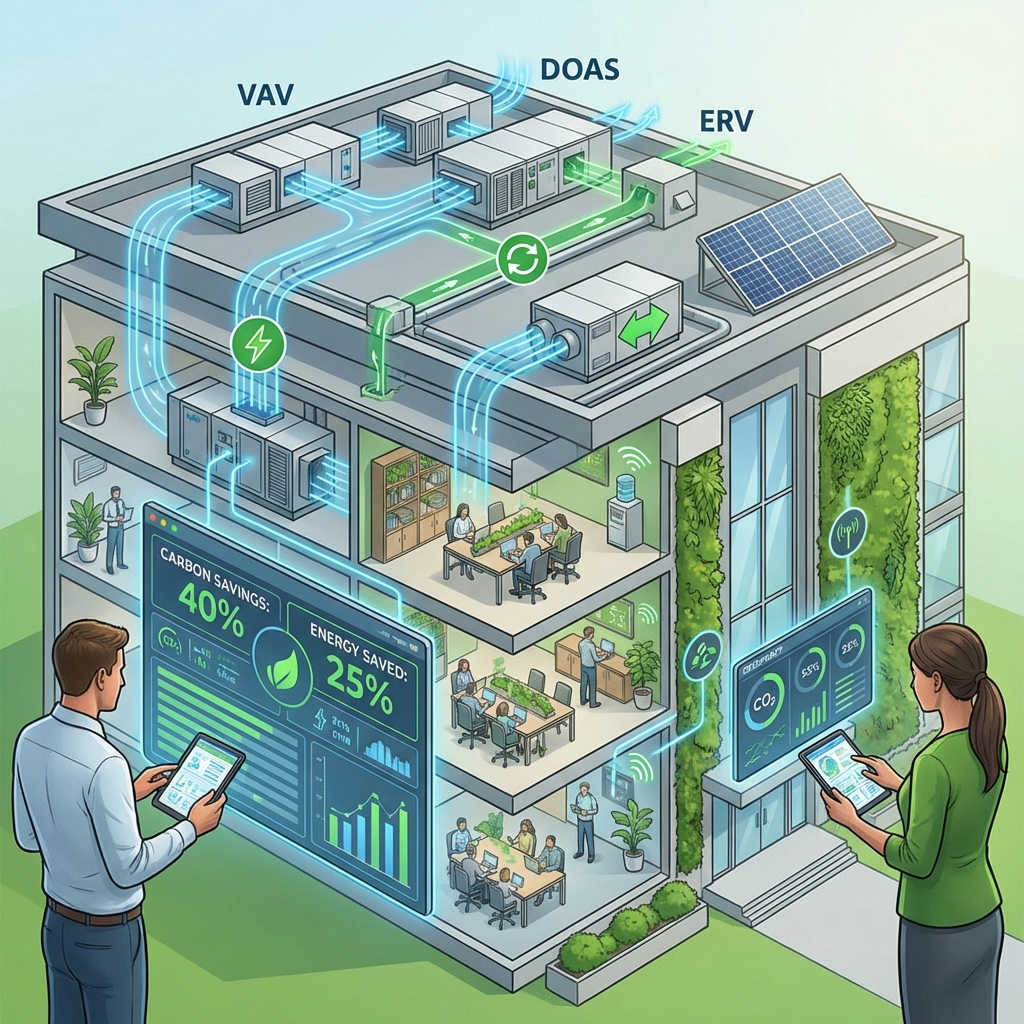
Smart ventilation systems are key to lowering energy consumption and reducing carbon emissions in modern buildings. By integrating automation, sensors, and energy-efficient equipment, buildings can:
- Minimize energy waste
- Improve indoor air quality (IAQ)
- Enhance occupant comfort
- Support sustainability and carbon reduction goals
YAOAN Ventilation provides smart ventilation solutions tailored to commercial, industrial, and infrastructure projects.
Key Strategies for Reducing Carbon Emissions
Demand-Controlled Ventilation (DCV)
Benefits:
- Adjusts airflow based on occupancy and CO₂ levels
- Reduces fan and heating/cooling energy use
- Supports LEED and green building certification points
Implementation Tips:
- Install CO₂, humidity, and occupancy sensors
- Integrate DCV with building automation systems
- Regularly calibrate sensors for accurate performance
Variable Air Volume (VAV) Systems
Benefits:
- Modulates airflow per zone according to real-time demand
- Reduces unnecessary energy consumption
- Improves comfort and temperature consistency
Implementation Tips:
- Combine VAV with DOAS for optimal outdoor air handling
- Use predictive controls to pre-condition zones before occupancy
- Monitor energy consumption via dashboards
Energy Recovery Ventilators (ERV)
Benefits:
- Reuse thermal energy from exhaust air
- Reduce heating and cooling loads
- Lower overall building carbon footprint
Implementation Tips:
- Select ERVs with high thermal efficiency
- Integrate with VAV or DOAS systems for full building coverage
- Include filters to maintain air quality
Smart Building Automation
Benefits:
- Optimizes HVAC schedules based on occupancy and weather
- Provides actionable insights via energy dashboards
- Detects anomalies to prevent energy waste
Implementation Tips:
- Use IoT sensors for temperature, airflow, and energy consumption
- Set automated setpoints for HVAC operation
- Track carbon footprint reduction metrics in real-time
Best Practices
Early Design Integration
- Include energy modeling and CFD simulations
- Coordinate HVAC design with architectural, structural, and electrical plans
Continuous Commissioning
- Test airflow, IAQ, and energy use during and after installation
- Adjust systems for peak efficiency and minimal carbon output
Maintenance and Monitoring
- Implement preventive maintenance to sustain performance
- Track system efficiency and carbon reduction over the lifecycle
FAQ
What is smart ventilation?
Smart ventilation uses sensors, automation, and energy-efficient equipment to adjust airflow and temperature in real-time, optimizing energy use and indoor air quality.
How does smart ventilation reduce carbon emissions?
By minimizing unnecessary heating, cooling, and fan operation, energy consumption drops, which directly reduces associated carbon emissions.
What systems are involved in smart ventilation?
VAV systems, DOAS units, ERVs, DCV, and building automation systems.
Can smart ventilation contribute to LEED certification?
Yes, energy-efficient and demand-controlled ventilation contributes to LEED indoor environmental quality and energy efficiency credits.
About YAOAN Ventilation
YAOAN Ventilation delivers smart, energy-efficient ventilation solutions for commercial, industrial, and infrastructure projects. By combining VAV, DCV, DOAS, ERVs, and building automation, YAOAN helps buildings reduce carbon emissions, optimize energy use, and maintain healthy indoor environments.