Table of Contents
ToggleIntroduction
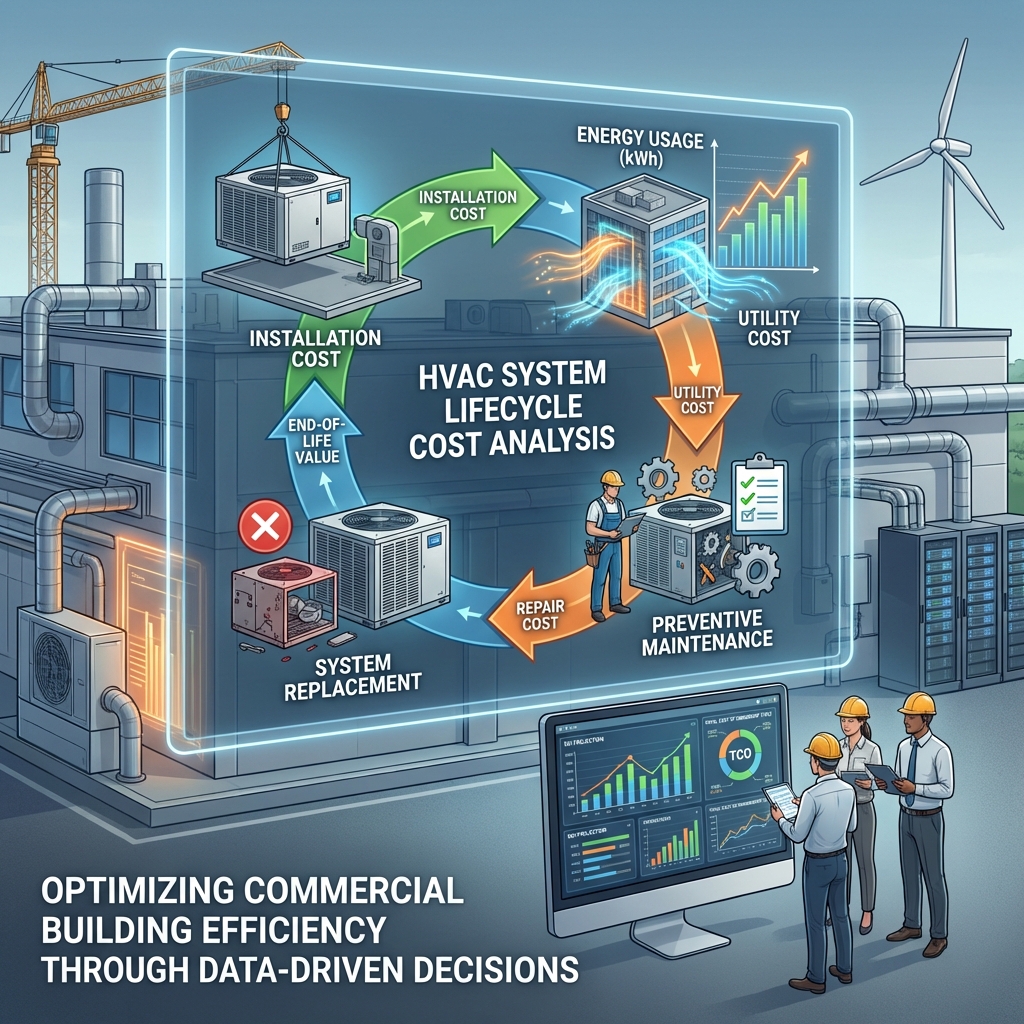
Lifecycle cost analysis (LCCA) evaluates the total cost of an HVAC system over its operational life. This approach considers:
- Initial design and installation expenses
- Energy consumption and operational costs
- Maintenance and repair costs
- Equipment replacement and disposal
By applying LCCA, building owners and engineers can make informed decisions that balance upfront investment with long-term efficiency and performance.
Components of HVAC Lifecycle Cost
Initial Design and Equipment Costs
- Purchase of chillers, fans, VAV/DOAS units, ductwork, and controls
- Installation labor and commissioning
- Integration with building automation and fire safety systems
Energy Costs
- Electricity for fans, pumps, chillers, and air handling units
- Gas or steam for heating systems
- Costs can be reduced using energy-efficient equipment and smart control systems
Maintenance and Operational Costs
- Preventive and corrective maintenance schedules
- Access, replacement parts, and labor costs
- Regular calibration of sensors and controllers
Replacement and End-of-Life Costs
- Equipment replacement cycles based on service life
- Disposal or recycling costs
- Upgrades to comply with new efficiency or safety regulations
Benefits of Lifecycle Cost Analysis
Improved Decision-Making
- Enables comparison of energy-efficient vs. standard systems
- Evaluates trade-offs between upfront cost and long-term savings
Energy Efficiency Optimization
- Identifies opportunities for VAV, DOAS, and heat recovery systems
- Reduces unnecessary energy consumption and peak load demand
Predictable Maintenance and Budgeting
- Helps plan preventive maintenance and replacement schedules
- Minimizes unexpected repair costs and system downtime
Best Practices for Lifecycle Cost Analysis
Accurate Modeling and Data Collection
- Collect detailed equipment specifications, energy rates, and operational hours
- Model future energy cost variations and inflation
Integration with Building Management Systems (BMS)
- Track real-time performance and identify inefficiencies
- Adjust system operation based on occupancy patterns and seasonal demand
Collaboration Across Stakeholders
- Include design engineers, contractors, and facility managers in analysis
- Align long-term planning with operational and budgetary goals
FAQ
What is HVAC lifecycle cost analysis?
It is the evaluation of total costs associated with an HVAC system, including design, installation, energy usage, maintenance, and replacement, over its operational life.
Why is lifecycle cost analysis important?
It helps building owners optimize investments, reduce energy costs, ensure system reliability, and plan maintenance efficiently.
How can energy costs be reduced in lifecycle analysis?
By selecting energy-efficient equipment, using VAV/DOAS systems, implementing heat recovery, and leveraging smart automation controls.
How often should lifecycle cost analysis be performed?
Ideally during design, periodically during system operation, and when planning major upgrades or replacements.
About YAOAN Ventilation
YAOAN Ventilation provides lifecycle-focused HVAC solutions, ensuring energy efficiency, long-term reliability, and cost-effective operation for commercial, industrial, and infrastructure projects. Our systems include smart controls, energy-saving equipment, and maintenance-friendly designs that optimize performance throughout the system’s lifespan.