Table of Contents
ToggleUnderstanding Lifecycle Costs in HVAC Systems
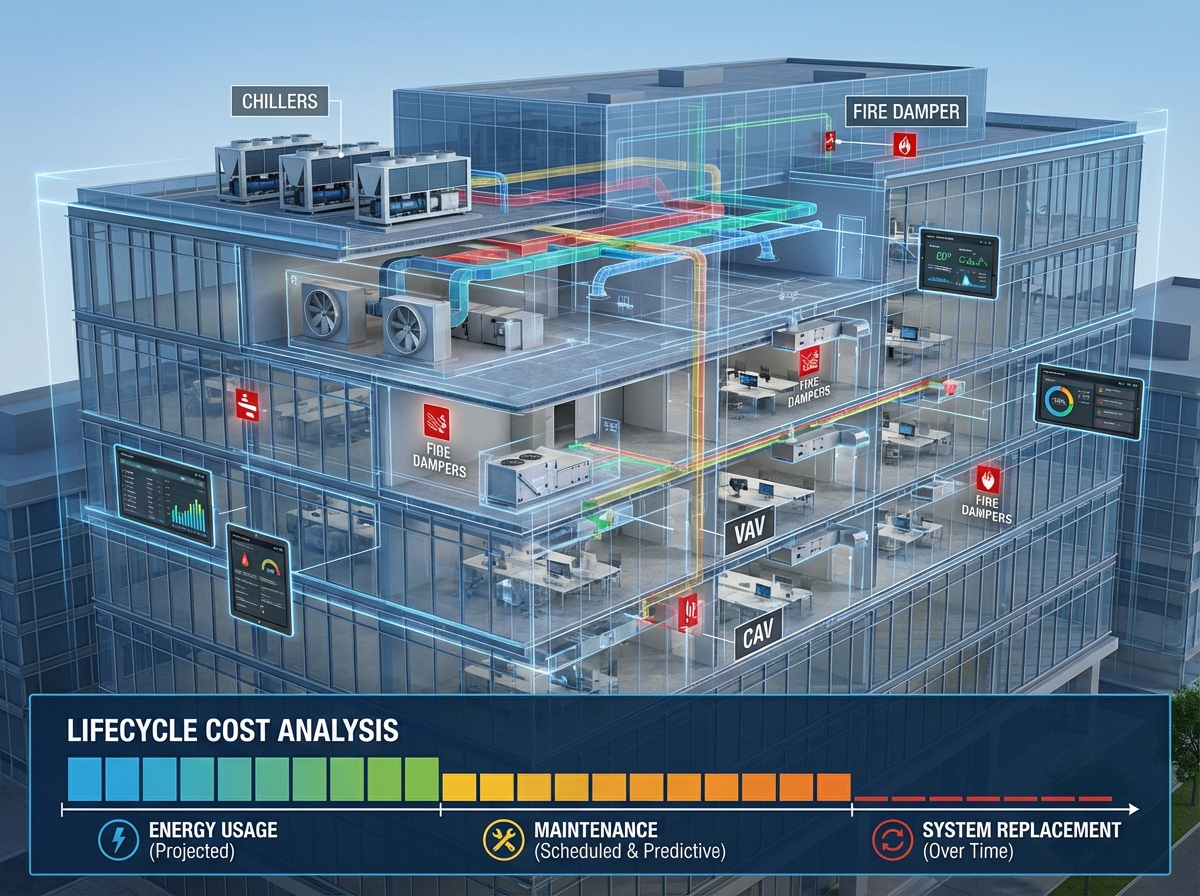
When planning HVAC systems for large buildings, it is crucial to consider the total cost over the system’s lifetime, not just initial installation. Lifecycle cost analysis (LCCA) ensures informed decision-making by evaluating:
- Initial capital costs
- Operational and energy expenses
- Maintenance and repair costs
- Replacement or upgrade costs
Proper LCCA helps building owners and engineers choose systems that optimize long-term performance, comfort, and budget efficiency.
Key Cost Components
Initial Installation Costs
- Equipment purchase (fans, VAV/CAV units, chillers, boilers, dampers)
- Ductwork, piping, and installation labor
- Controls, sensors, and automation integration
- Fire and smoke safety components
Initial costs vary depending on system type, complexity, and building size.
Energy Consumption Costs
- Electricity for fans, pumps, and cooling/heating units
- Seasonal variations in energy usage
- Energy-efficient systems such as VAV or DOAS reduce long-term expenses
- Integration with building automation can further optimize energy use
Maintenance and Operational Costs
- Regular inspection of ducts, diffusers, and fire dampers
- Replacement of filters, belts, and components
- Testing and certification for compliance with safety codes
- Labor and service agreements
Replacement and Upgrade Costs
- End-of-life equipment replacement
- System upgrades for energy efficiency or new regulatory compliance
- Integration with modern automation or building management systems
- Planned lifecycle extension through preventive maintenance
Comparing System Types Through Lifecycle Costs
VAV (Variable Air Volume) Systems
- Higher initial cost due to advanced controls
- Reduced energy consumption in variable-occupancy buildings
- Lower long-term operational costs
CAV (Constant Air Volume) Systems
- Lower installation cost
- Higher energy use for large buildings with varying occupancy
- May require earlier replacement or retrofit to meet efficiency standards
DOAS (Dedicated Outdoor Air Systems)
- Moderate installation cost
- Optimizes ventilation and humidity control
- Can reduce overall HVAC energy and maintenance costs when integrated with other systems
Design and Planning Considerations
Accurate Load Calculations
- Determine heating and cooling requirements for each zone
- Factor in occupancy, equipment heat load, and environmental conditions
Integration with Building Automation Systems (BAS)
- Real-time monitoring of energy consumption
- Automated control of fans, dampers, and HVAC zones
- Predictive maintenance scheduling to reduce unexpected costs
Maintenance Accessibility
- Design ductwork and equipment layouts for easy access
- Reduce labor costs and downtime for inspections and repairs
- Maintain system efficiency and compliance over the building’s lifecycle
Performance Metrics
Total Cost of Ownership (TCO)
- Sum of installation, energy, maintenance, and replacement costs
- Helps compare system options objectively
Energy Efficiency
- Measured in kWh/m²/year or annual operating cost
- Determines payback period for higher-efficiency systems
Safety and Compliance
- Fire dampers and smoke control systems
- Regulatory inspections and functional testing
- Avoid fines or retrofit costs
FAQ
What is HVAC lifecycle cost analysis?
It evaluates all costs associated with an HVAC system over its expected lifespan, including installation, operation, maintenance, and replacement.
Why is lifecycle cost analysis important?
It helps building owners make informed decisions, balancing upfront costs with long-term operational efficiency and safety compliance.
Do energy-efficient systems always have higher lifecycle costs?
Not necessarily. Higher initial investment in efficient systems like VAV or DOAS often results in lower operational and maintenance costs over time.
How often should lifecycle costs be reviewed?
Ideally, at system design, before major retrofits, and periodically during operation to optimize upgrades and maintenance planning.
About YAOAN Ventilation
YAOAN Ventilation provides comprehensive HVAC solutions with a focus on lifecycle cost efficiency. Our engineered systems combine energy optimization, fire and smoke safety, and long-term reliability, ensuring optimal performance and value for commercial, industrial, and public buildings.