Table of Contents
ToggleAirflow Challenges in Underground Stations
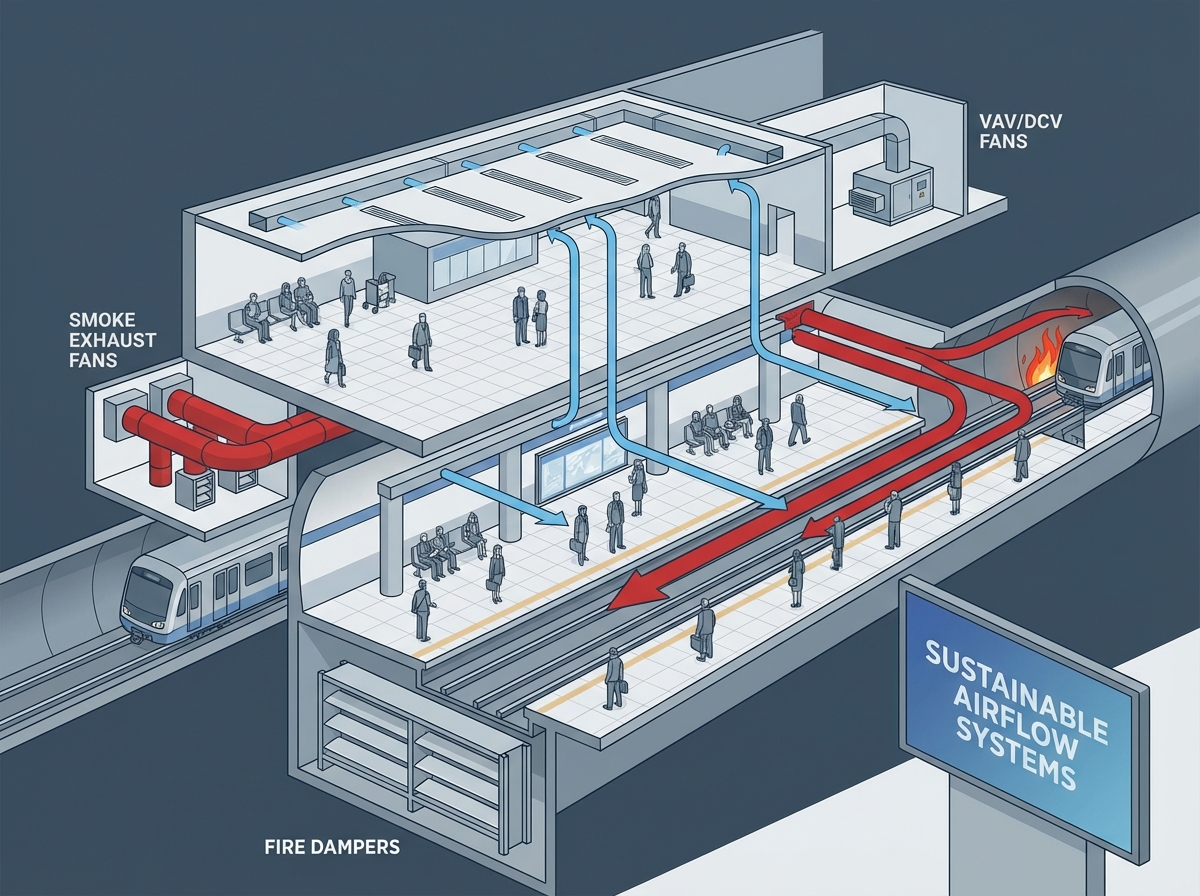
Metro and subway stations present unique ventilation challenges due to confined spaces, high passenger density, and continuous train operations. Effective systems must:
- Maintain optimal air quality and thermal comfort
- Control smoke and heat during emergencies
- Minimize energy consumption and operational costs
Energy-efficient ventilation is critical for sustainable operation while ensuring compliance with local safety regulations.
Core Considerations
Passenger Comfort and Air Quality
- Continuous ventilation ensures fresh air supply despite high occupancy
- CO2 and particulate sensors enable demand-controlled airflow
- Thermal comfort is maintained even during peak hours or train arrivals
Energy Efficiency Strategies
- Variable-speed fans adapt airflow to real-time occupancy and train schedules
- Heat recovery ventilation reduces energy loss from exhausting warm air
- Smart controls integrate with station monitoring systems to optimize energy use
Fire and Smoke Safety Integration
- Fire dampers, smoke exhaust fans, and emergency vents are essential
- Automated sequences prevent smoke spread and support safe evacuation
- Compliance with NFPA, EN, or local fire codes is mandatory
Ventilation System Types
Longitudinal Ventilation Systems
- Air moves along the platform parallel to the track
- Supports smoke control in case of train fire or electrical fault
- Effective for tunnels and long underground corridors
Transverse Ventilation Systems
- Air is supplied and exhausted perpendicularly across the station or platform
- Maintains uniform temperature and airflow in wide underground halls
Mixed or Hybrid Systems
- Combines longitudinal and transverse ventilation for optimal control
- Integrates energy recovery, air quality sensors, and emergency smoke control
Design and Operational Considerations
Fan and Duct Layout
- Long-throw diffusers or slot diffusers maintain airflow to occupied zones
- Pressure and velocity balance prevents drafts while ensuring smoke removal efficiency
Automated Control and Monitoring
- Centralized Building Management System (BMS) monitors temperature, airflow, and smoke detectors
- Automated VAV or DCV control reduces energy consumption while responding to occupancy changes
Maintenance and Accessibility
- Easy access for inspection and cleaning ensures long-term efficiency
- Periodic testing of smoke and fire dampers maintains safety compliance
- Documentation supports regulatory inspections and operational optimization
Performance Metrics
Energy Efficiency
- Reduced fan power and heating/cooling load through smart controls
- Demand-controlled ventilation saves energy during off-peak periods
Safety Compliance
- Fire dampers, smoke exhaust, and emergency vents meet local codes
- Automated sequences ensure safe evacuation during emergencies
Air Quality and Comfort
- CO2 and particulate control maintain breathable air
- Thermal comfort maintained across platforms and corridors
FAQ
Why is energy-efficient ventilation important in metro stations?
Underground stations have high occupancy and limited air exchange. Energy-efficient systems reduce operational costs while maintaining comfort and safety.
How do ventilation systems handle fire or smoke emergencies?
Fire dampers, smoke exhaust fans, and automated sequences prevent smoke spread and allow safe evacuation.
Can demand-controlled ventilation reduce energy usage in subway stations?
Yes, sensors adjust airflow based on real-time passenger density, train frequency, and CO2 levels.
What types of ventilation systems are used in underground stations?
Longitudinal, transverse, or hybrid systems are selected based on station layout, tunnel length, and safety requirements.
About YAOAN Ventilation
YAOAN Ventilation provides engineered, energy-efficient ventilation solutions for metro and subway stations. Our systems integrate airflow optimization, fire and smoke safety, and intelligent monitoring, ensuring passenger comfort, regulatory compliance, and cost-effective operation in underground transport environments.