Table of Contents
ToggleIntroduction
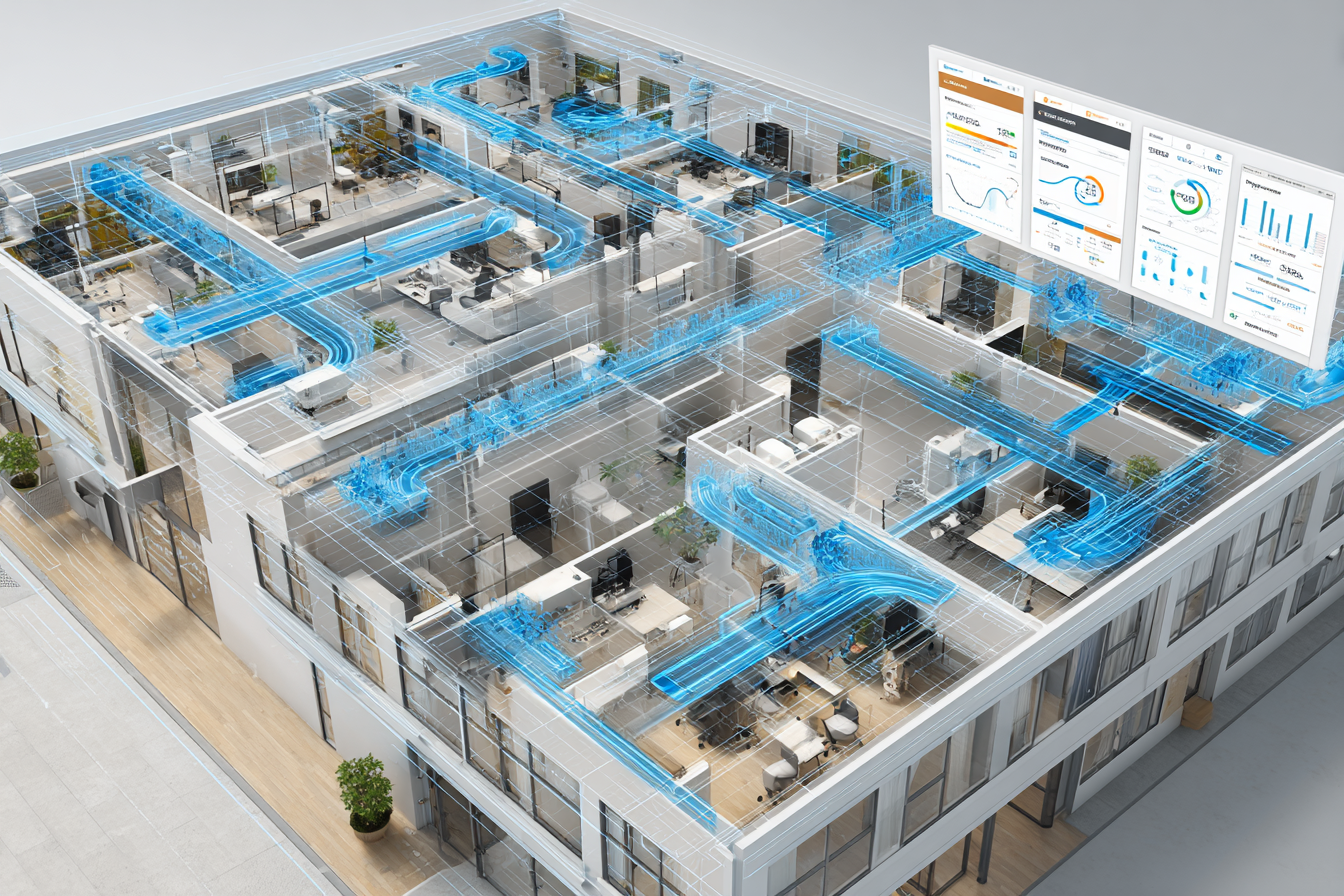
Demand-Controlled Ventilation (DCV) is an advanced HVAC strategy that adjusts ventilation rates based on occupancy, CO₂ levels, or indoor air quality (IAQ) parameters. By supplying fresh air only when needed, DCV systems improve energy efficiency while ensuring healthy and comfortable indoor environments.
YAOAN Ventilation provides DCV solutions designed for office complexes, hospitals, airports, shopping centers, and industrial facilities, integrating sensors, controllers, and smart building management systems.
How DCV Systems Work
Core Components
- CO₂ and IAQ Sensors: Monitor occupancy and air quality in each zone
- VAV Boxes with Dampers: Adjust airflow according to sensor feedback
- Central AHU or Rooftop Units: Deliver conditioned air based on zone demand
- Building Management System (BMS): Coordinates control strategies across all zones
Operational Principle
- Sensors detect CO₂ levels, occupancy, or pollutants
- VAV boxes modulate airflow in response to real-time conditions
- Airflow is increased only when zones are occupied or IAQ thresholds are exceeded
- Reduces fan energy and conditioning load without compromising comfort
Energy-Saving Benefits
Optimized Airflow
- Reduces over-ventilation in lightly occupied or unoccupied zones
- Maintains IAQ while cutting unnecessary energy use
Reduced Fan Power
- Variable airflow lowers energy consumption of central AHU fans
- Contributes to overall HVAC system efficiency and cost savings
Integration with Smart Building Systems
- Works seamlessly with BMS, IoT sensors, and automation controls
- Enables real-time monitoring and predictive energy management
Design Considerations
Zoning Strategy
- Divide buildings into multiple DCV zones based on occupancy patterns
- Consider high-traffic areas such as lobbies, conference rooms, and auditoriums separately from low-occupancy spaces
Sensor Placement
- Install CO₂ or IAQ sensors at breathing height in representative areas
- Avoid direct exposure to vents or windows to prevent false readings
System Maintenance
- Regular calibration of sensors and actuators
- Periodic verification of airflow and IAQ compliance
- Update BMS settings based on seasonal changes and occupancy variations
FAQ
What is Demand-Controlled Ventilation (DCV)?
DCV is an HVAC strategy that modulates airflow based on occupancy or air quality, reducing energy use while maintaining indoor comfort.
How much energy can DCV systems save?
Depending on building type and occupancy patterns, DCV can reduce HVAC energy consumption by 20–40% compared to fixed-rate ventilation.
Are DCV systems suitable for all buildings?
DCV is most effective in multi-zone buildings with variable occupancy, such as offices, hospitals, airports, and shopping centers.
Can YAOAN provide turnkey DCV solutions?
Yes, YAOAN delivers DCV systems including VAV boxes, dampers, sensors, and BMS integration for large-scale projects.
About YAOAN Ventilation
YAOAN Ventilation provides Demand-Controlled Ventilation (DCV) solutions for large buildings, combining sensors, VAV systems, dampers, and building management integration. Our solutions ensure energy-efficient HVAC operation, optimal IAQ, and compliance with international standards, supporting sustainable and cost-effective building design worldwide.