Table of Contents
ToggleIntroduction: The Role of Fire Dampers
Fire dampers are a critical safety component in HVAC systems, designed to:
- Prevent the spread of fire and smoke through ductwork
- Protect occupants and property
- Maintain system performance and airflow
Proper installation is essential to meet international fire codes and avoid costly mistakes.
Best Practices for Fire Damper Installation
Selecting the Right Fire Damper
- Choose UL, EN, or NFPA certified dampers
- Verify temperature and pressure ratings for the project
- Match damper size to duct dimensions and airflow requirements
Correct Placement in Ductwork
- Install close to penetrations through fire-rated walls or floors
- Ensure clearance around the damper for proper operation
- Avoid placing dampers in areas with restricted access for inspection
Proper Integration with HVAC Systems
- Confirm compatibility with airflow and static pressure
- Connect to control systems for automatic closure during fire events
- Consider zoning and smoke control strategies for multi-level buildings
Commissioning and Testing
- Test dampers after installation to ensure correct operation
- Document fire damper location, type, and maintenance requirements
- Schedule periodic inspections per NFPA 80 and local codes
Common Pitfalls to Avoid
- Installing incorrect damper type or size
- Blocking access for maintenance or inspection
- Ignoring coordination with other HVAC components
- Failing to test or commission after installation
- Overlooking code compliance and documentation
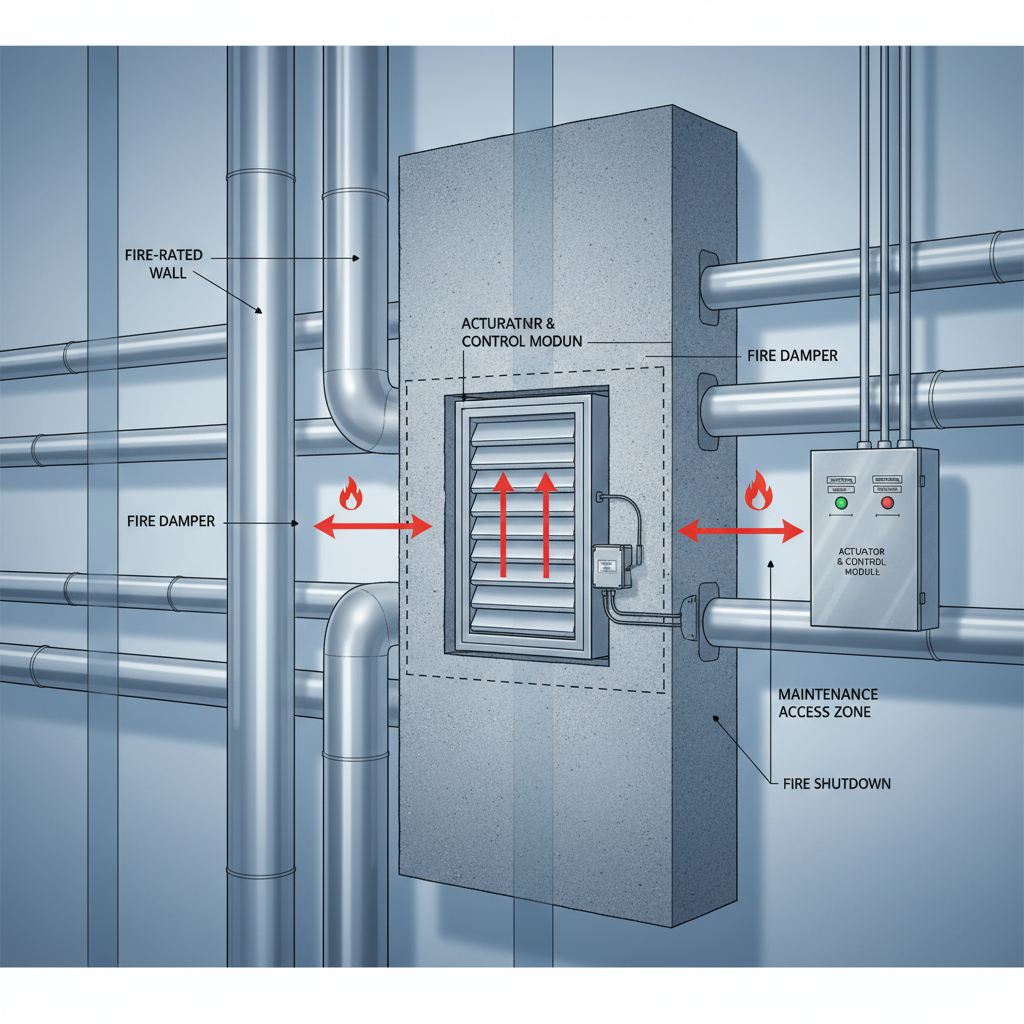
Image Reference (for Blog Integration)
Image Alt Text:
Professional HVAC fire damper installation in commercial building ductwork, showing proper clearance and control system integration.
Image Title:
Fire Dampers Installation Best Practices
Conclusion: Safe and Efficient Fire Damper Installation
Following YAOAN’s best practices ensures:
- Fire safety and compliance with EN, UL, NFPA standards
- Reliable HVAC performance even during emergency conditions
- Easy inspection and maintenance for long-term operational integrity
Proper selection, placement, integration, and testing are key to a successful fire damper installation in modern commercial and industrial buildings.
FAQ – Fire Dampers
What is a fire damper in HVAC?
A fire damper is a device installed in ductwork that automatically closes to prevent the spread of fire and smoke through walls or floors.
How often should fire dampers be inspected?
Per NFPA 80, fire dampers should be inspected and tested at least annually, with some building codes requiring more frequent checks.
Can fire dampers affect HVAC performance?
Yes, improperly sized or installed dampers can restrict airflow or cause pressure imbalances. Correct selection and installation maintain both safety and system efficiency.