Table of Contents
ToggleIntroduction: Unique HVAC Challenges in Lounges and VIP Areas
Airport lounges and VIP areas present distinctive HVAC challenges compared to standard terminals:
- High expectations for thermal comfort and air quality
- Low tolerance for HVAC noise in quiet seating and work areas
- Need for zoned control to accommodate variable occupancy
- Integration with energy-efficient building systems
Specialized ventilation solutions balance comfort, indoor air quality, and energy optimization.
Core Ventilation Requirements
Zoned Airflow for Privacy and Comfort
- Lounges often have private seating, meeting rooms, and dining areas
- Independent HVAC zones ensure custom temperature and airflow control
- Avoid cross-contamination between high-occupancy and low-occupancy zones
Noise-Sensitive HVAC Components
- Fans, AHUs, and ductwork must minimize audible noise
- Use silencers, acoustic duct liners, and vibration isolation
- Low-velocity diffusers maintain comfort without drafts
Filtration and Air Quality Control
- High traveler turnover increases particulate and CO2 levels
- Employ HEPA or MERV-13 filters for premium air quality
- Optional UV-C or air purification systems enhance safety in high-risk areas
Strategies for Lounge HVAC Design
Smart Zoning and Energy Efficiency
- Separate lounges, business centers, and rest areas into dedicated zones
- Implement VAV or DCV systems to match airflow to real-time occupancy
- Use smart thermostats and building automation for optimal energy management
Integration with Architectural and Interior Design
- Conceal diffusers, ductwork, and AHUs for a premium aesthetic
- Ensure supply air distribution does not interfere with furniture layouts or lighting
- Coordinate with acoustic treatment to maintain quiet environments
Maintenance and Accessibility
- AHUs, filters, and diffusers should be easily accessible for routine cleaning
- Monitor performance with sensors and remote building management systems
- Documentation ensures long-term operational efficiency and comfort
Compliance and Standards
HVAC systems for airport lounges must meet:
- ASHRAE Standards for Indoor Air Quality and Thermal Comfort
- Local airport building codes and safety regulations
- Fire and smoke control requirements per NFPA and EN standards
Image Reference (for Blog Integration)
Image Alt Text:
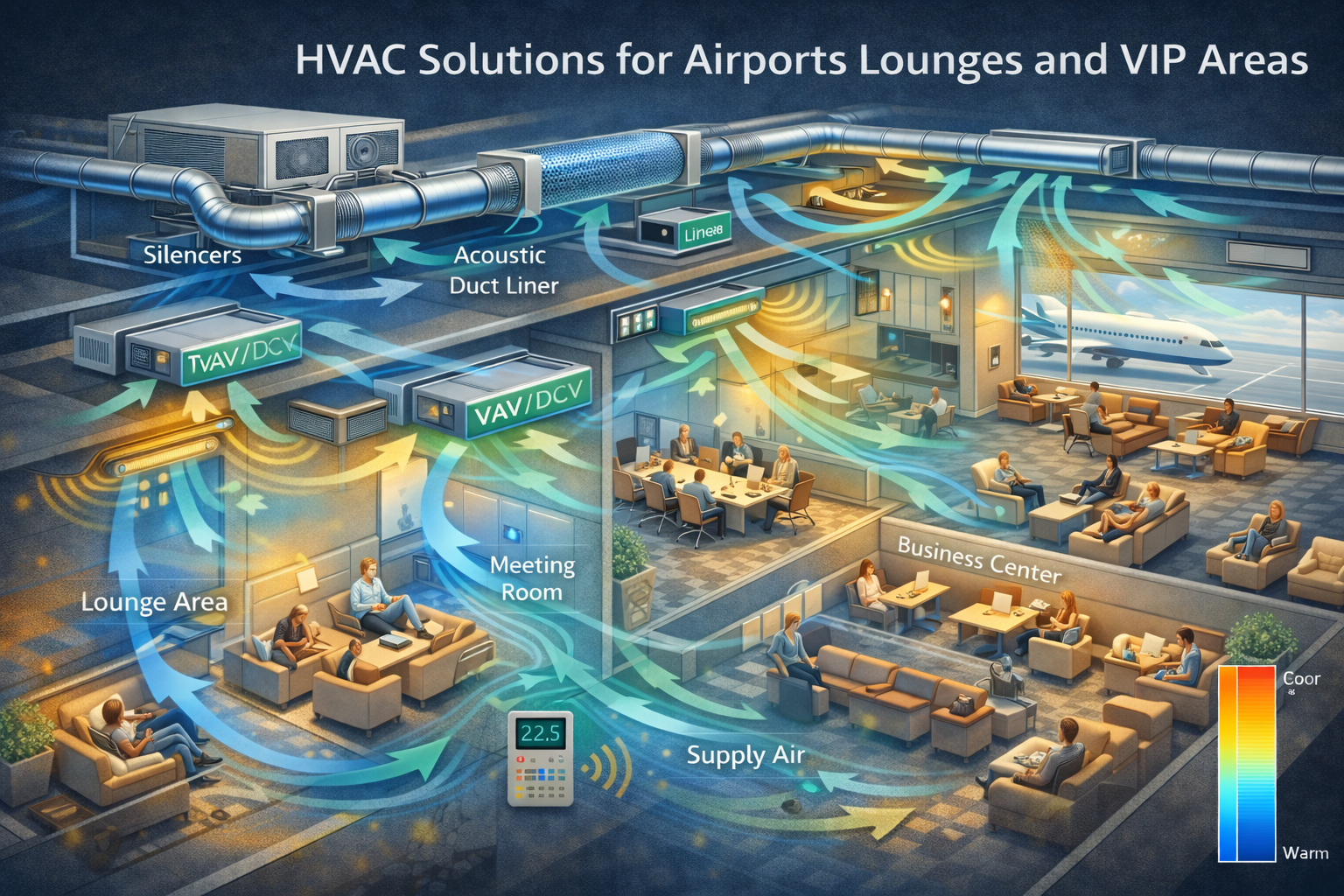
Airport lounge HVAC system showing diffusers, airflow zones, and noise control components.
Image Title:
HVAC Solutions for Airports Lounges and VIP Areas
Conclusion: Premium Comfort Through Advanced HVAC Design
Well-designed HVAC in lounges and VIP areas ensures:
- Optimal comfort and temperature control for all occupants
- High indoor air quality with filtration and air purification
- Quiet operation compatible with premium environment expectations
- Energy efficiency through zoning, VAV, and smart controls
Integrating comfort, air quality, acoustic performance, and energy efficiency from the design phase is essential for premium airport spaces.
FAQ – Airport Lounge HVAC
How do HVAC systems in lounges differ from main terminals?
They focus more on noise reduction, personalized zones, and high air quality rather than just large-volume airflow.
What noise control strategies are effective for VIP areas?
Use silencers, acoustic duct liners, low-velocity diffusers, and vibration-isolated AHUs.
Are there energy-saving options for lounges with variable occupancy?
Yes, VAV systems, demand-controlled ventilation (DCV), and automated zoning can reduce energy use.
What filtration standards are recommended?
HEPA or MERV-13 filters are standard for high-quality, safe air in premium spaces.