Table of Contents
ToggleIntroduction
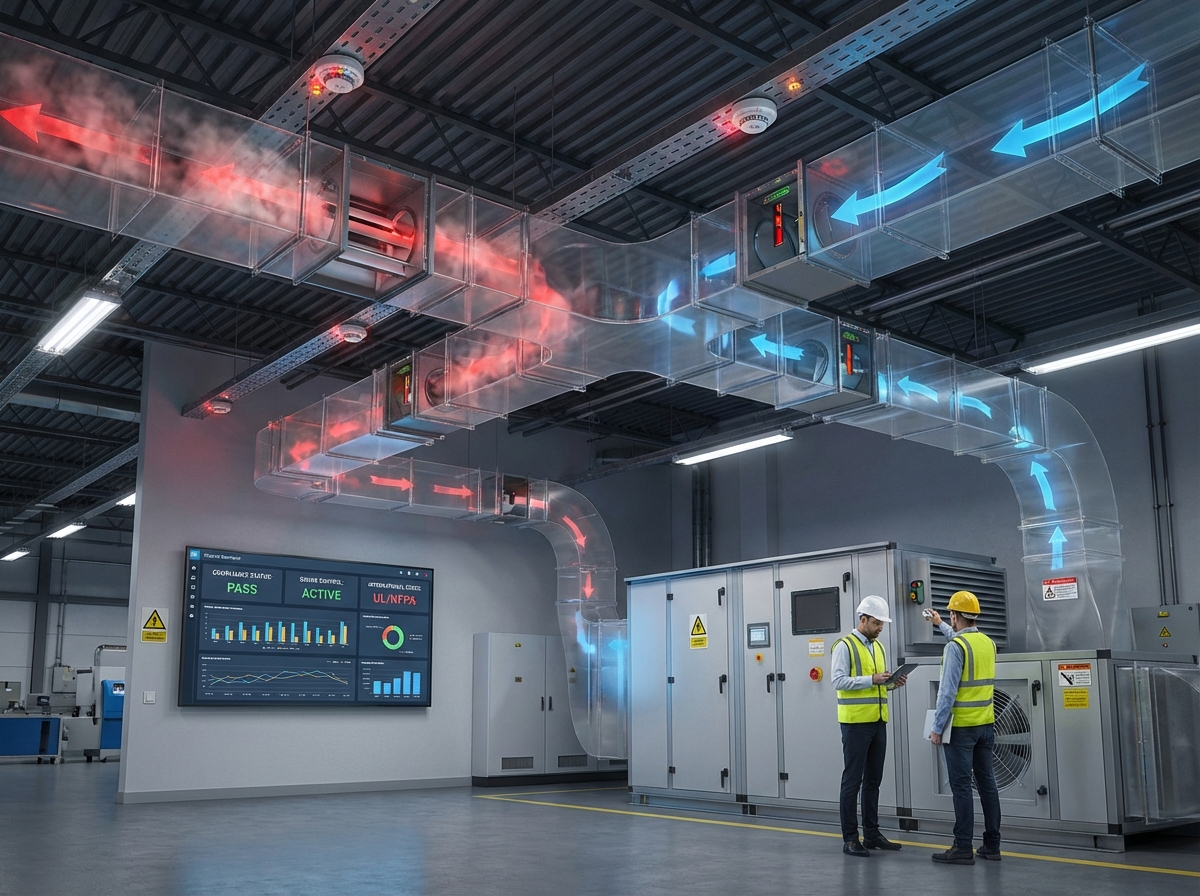
Fire and smoke control is a critical aspect of HVAC design in modern buildings. International codes such as NFPA, EN, UL, and local building regulations dictate requirements to:
- Protect occupants
- Limit fire and smoke spread
- Enable safe evacuation
- Ensure building code compliance
YAOAN Ventilation provides fire and smoke control solutions that meet global standards for commercial, industrial, and infrastructure projects.
Key Fire and Smoke Control Requirements
NFPA Standards (North America)
Requirements:
- NFPA 90A/90B for air conditioning and ventilation systems
- Installation of fire and smoke dampers at duct penetrations
- Regular testing and maintenance of dampers and smoke control systems
Implementation Tips:
- Integrate smoke detectors and fire dampers with building automation
- Ensure dampers are rated for required temperature and smoke class
- Maintain documentation for inspection and certification
EN Standards (Europe)
Requirements:
- EN 15650 for smoke and fire dampers
- Compliance with building fire safety codes (local adaptations may apply)
- Coordination with fire alarm and smoke control systems
Implementation Tips:
- Select EN-certified fire and smoke dampers
- Ensure proper installation in ductwork and wall/ceiling penetrations
- Perform verification tests according to EN protocols
UL Standards
Requirements:
- UL 555 (fire dampers) and UL 555S (smoke dampers)
- Verification of mechanical, electrical, and control components
- Independent testing to confirm compliance
Implementation Tips:
- Use UL-listed dampers for US and international projects
- Conduct installation and operational tests as per UL instructions
- Document testing results for authorities having jurisdiction (AHJ)
Best Practices for Fire and Smoke Control
Integrated Design Approach
- Coordinate HVAC, fire protection, and safety teams during early design
- Use BIM modeling to plan duct routes, damper locations, and smoke management zones
Testing and Commissioning
- Conduct Factory Acceptance Tests (FAT) and Site Acceptance Tests (SAT)
- Verify damper operation, airflow, and smoke containment
Maintenance and Lifecycle Management
- Schedule periodic testing and inspections
- Maintain records for compliance audits and insurance requirements
- Replace or service components that fail to meet performance standards
FAQ
What are fire and smoke dampers?
Devices installed in HVAC ducts to prevent the spread of fire and smoke through ventilation systems, closing automatically when triggered by heat or smoke detection.
Why is compliance with international codes important?
Compliance ensures occupant safety, legal approval, and reduces liability while maintaining system reliability.
How often should fire and smoke dampers be tested?
Typically at installation, after modifications, and periodically as per NFPA, EN, or UL standards (usually annually).
Can YAOAN systems meet international fire and smoke code requirements?
Yes, YAOAN provides EN, UL, and NFPA-compliant fire and smoke control solutions with full installation guidance and documentation.
About YAOAN Ventilation
YAOAN Ventilation delivers fire and smoke control solutions that comply with international codes, including NFPA, EN, and UL. Our products include fire and smoke dampers, integrated control systems, and automated HVAC safety components designed for commercial buildings, industrial facilities, and large infrastructure projects, ensuring safety, compliance, and reliable performance.