Table of Contents
ToggleOptimized Airflow for Airport Terminals
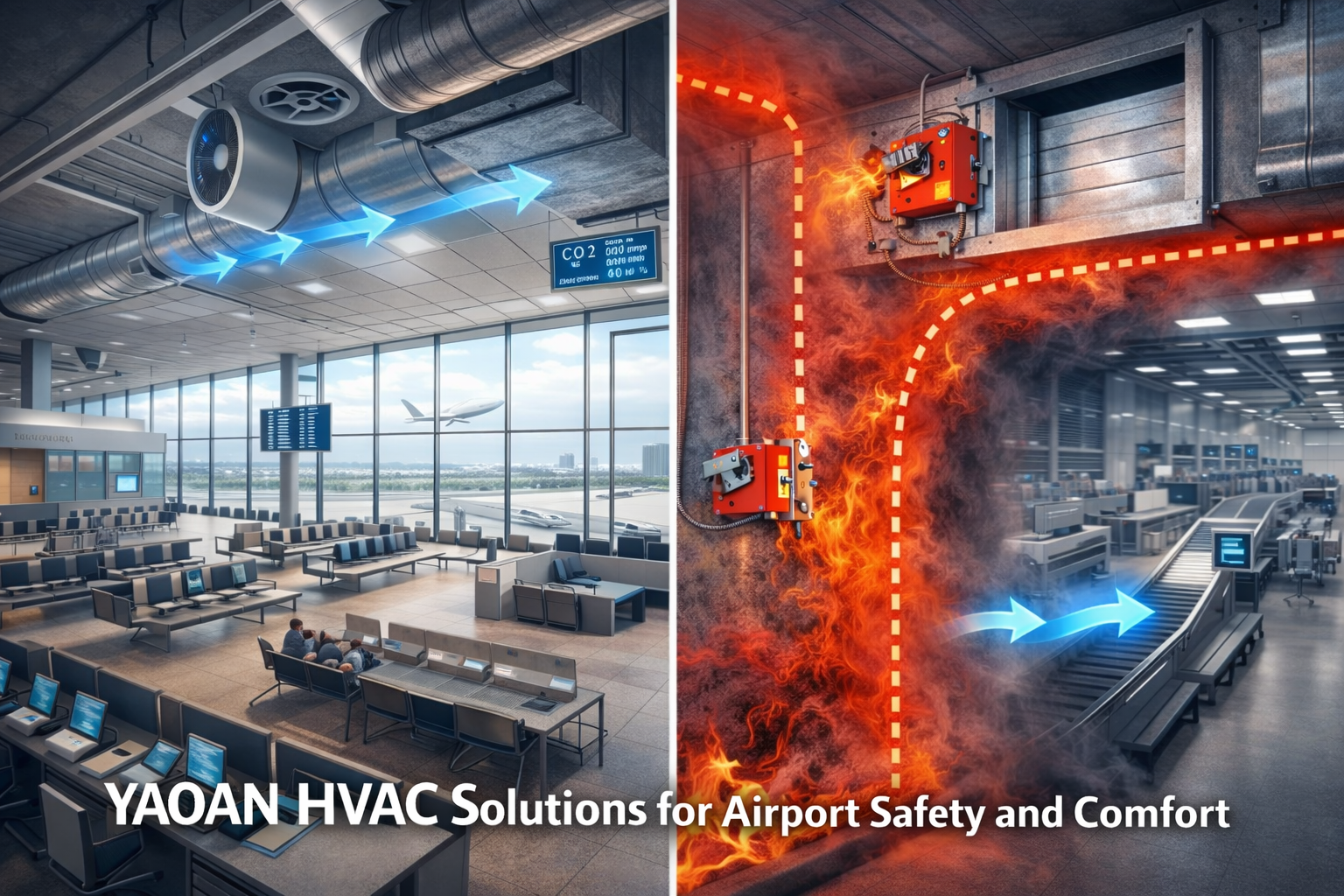
Airports demand high-performance HVAC systems for large, open spaces like terminals, gates, and lounges. Passenger comfort, air quality, and safety are top priorities.
YAOAN delivers HVAC systems designed for high ceilings, long throw air distribution, and variable occupancy. Integrated solutions include fans, diffusers, fire dampers, and smart controls.
Core HVAC Components for Airports
Air Handling Units and Fans
- Deliver controlled airflow across terminals, lounges, and baggage areas
- Include variable speed drives for energy efficiency
- High-capacity fans for large-volume spaces
Diffusers and Long-Throw Nozzles
- Ensure airflow reaches distant seating areas
- Minimize drafts and noise
- Maintain temperature uniformity in atriums and open halls
Fire Dampers and Smoke Control
- Prevent fire and smoke spread through ductwork
- Integrated with smoke extraction fans and emergency systems
- Compliant with NFPA and local fire codes
Intelligent Monitoring and Control
- Sensors for CO2, temperature, humidity, and air quality
- Automated adjustment based on occupancy and environmental conditions
- Integration with Building Management Systems (BMS)
Applications Across Airport Zones
Passenger Terminals and Lounges
- Balanced ventilation for comfort
- Noise control for quiet passenger environments
- Air filtration for healthy indoor air quality
Gates and Boarding Areas
- Long-throw airflow for high ceilings
- Maintain comfort despite high passenger density
- Coordinated with emergency smoke extraction
Baggage and Cargo Handling
- Exhaust systems for heat, dust, and smoke control
- Fire safety dampers integrated for risk mitigation
- Energy-efficient air circulation for operational areas
Technical and Operational Spaces
- Server rooms and operations centers require precise temperature and airflow
- Redundant HVAC systems for continuous operation
- Air quality monitoring to protect sensitive equipment
Design Considerations for Airport HVAC
Airflow and Comfort
- Large-volume spaces need high throw diffusers and properly sized fans
- CFD simulations optimize duct layout and airflow patterns
- Minimize drafts and temperature stratification
Fire Safety and Smoke Management
- Fire dampers in all critical ductwork
- Smoke-control fans and emergency extraction
- Compliance with aviation safety codes and local regulations
Energy Efficiency
- Variable air volume (VAV) for passenger areas
- Heat recovery for exhaust air
- Smart controls to adjust based on occupancy and time of day
Maintenance and Reliability
- Easy access to fans, diffusers, and dampers
- Predictive maintenance via sensors and monitoring
- Modular system components simplify repair and replacement
FAQ
Q1: Why are HVAC systems critical in airports?
Airports are large spaces with high occupancy. HVAC systems ensure passenger comfort, air quality, and safe airflow in normal and emergency conditions.
Q2: What types of YAOAN solutions are used in airports?
Air handling units, fans, diffusers, fire dampers, smoke-control systems, and intelligent sensors for automated airflow management.
Q3: How do YAOAN systems handle fire and smoke?
Fire dampers isolate ducts during a fire, while smoke extraction fans remove smoke from critical areas, ensuring safe evacuation.
Q4: Can YAOAN systems improve energy efficiency?
Yes. Variable speed drives, heat recovery, and smart occupancy-based control reduce energy consumption while maintaining comfort.
About YAOAN Ventilation
YAOAN Ventilation has nearly 30 years of experience delivering airflow and fire safety solutions. Since 1996, YAOAN has supplied high-performance fans, diffusers, fire dampers, smoke-control systems, and smart HVAC solutions for airports, terminals, and large public spaces.
With YAOAN, airports can maintain comfortable, safe, and energy-efficient environments for passengers, staff, and operational facilities.