Table of Contents
ToggleVentilation at the Core of Contaminant Control
Indoor contaminants never come from a single source, and no single device solves them. From a ventilation perspective, effective contaminant control combines outdoor air, filtration, local exhaust, and pressure zoning into one strategy.
For building professionals, the goal is simple but demanding: keep contaminant levels low enough that the space remains safe, comfortable, and compliant throughout its life, not only on day one.
Mapping Indoor Contaminants Before You Design
Knowing what you are trying to control
Different buildings face very different contaminant profiles. Typical categories include:
- Gases and vapors – solvents, combustion products, VOCs from finishes and furnishings
- Particles – dust, PM2.5, fibers, welding fume, process powders
- Moisture-related contaminants – mold spores and byproducts in damp zones
- Bioaerosols – droplets and particles associated with people, animals, or processes
You cannot design a serious control strategy until you understand which of these matter most in each project.
Identifying sources and exposure points
Key questions during design and retrofit work:
- Where do contaminants originate: outdoors, processes, materials, or people?
- Where do occupants actually spend time relative to those sources?
- Which rooms require stricter controls, such as labs, clean areas, or healthcare spaces?
Answers to these questions shape decisions about air-change rates, filtration levels, and the location of local exhaust.
Ventilation Tools for Contaminant Control
Once sources and risks are clear, the ventilation system provides several levers that work together rather than in isolation.
Dilution with outdoor air
Outdoor air, when properly treated, dilutes many indoor contaminants. Designers set minimum outdoor air rates to:
- Remove heat and odors from occupied zones
- Control indoor-generated particles and gases
- Support code requirements and industry guidelines
However, dilution alone often fails in high-load areas. It works best as a base layer that supports more focused control measures.
Filtration in central units and terminals
Filtration captures particles instead of only spreading them. Central HVAC units usually carry the main filter banks, where designers choose:
- Prefilters for coarse dust and debris
- Fine filters sized to address PM2.5 and other small fractions
- Higher-grade filters or HEPA in sensitive or high-risk spaces
Some systems add filters in fan coil units or terminals to protect coils and provide local improvement. All filter decisions must align with available fan pressure and maintenance capacity to keep AIRFLOW CONTROL stable.
Local exhaust and capture at the source
Where a process or activity releases contaminants at a defined point, local exhaust almost always delivers the most efficient control. Examples include:
- Hoods over cooking or welding operations
- Capture arms at workstations that handle powders or fumes
- Dedicated exhaust from copy rooms, printing areas, or chemical stores
Capturing contaminants near the source reduces both exposure and load on general ventilation and filtration systems.
Pressure zoning and airflow direction
Pressure control defines how air and contaminants move between rooms. Effective zoning:
- Keeps cleaner spaces slightly positive relative to adjacent corridors or service rooms
- Holds high-load spaces (toilets, kitchens, workshops) slightly negative
- Uses door undercuts, transfer grilles, and duct arrangements that support these pressure differences
When zoning works, contaminants stay near their origin instead of drifting through the building.
Air distribution patterns
Even with good filtration and zoning, distribution patterns inside each room decide how contaminants reach or avoid breathing zones. Supply and return placement should:
- Sweep air through occupied areas before it reaches exhaust or return points
- Avoid stagnant corners where contaminants can accumulate
- Minimize short-circuiting between supply diffusers and returns
For complex or high-risk spaces, simple airflow visualization or modeling can confirm that the pattern supports the intended contaminant control.
Keeping Control Strategies Working Over Time
Operation and maintenance practices
Contaminant control is an ongoing task, not a one-time installation. Operations teams play a central role by:
- Replacing filters on schedule or by monitored pressure drop
- Keeping coils, drain pans, and accessible duct sections clean
- Inspecting and cleaning local exhaust hoods and ductwork
- Checking outdoor air intakes for debris, standing water, or nearby pollution sources
These actions prevent the system itself from becoming a contaminant source.
Monitoring and adjustment
Measurements confirm that the strategy still works under real use. Depending on the project, teams may:
- Track CO₂ as a proxy for occupancy and general ventilation effectiveness
- Spot-check particle levels in high-sensitivity areas
- Review complaints, odor reports, and comfort issues as early warning signs
- Adjust setpoints, schedules, or hood positions based on observed performance
Regular review keeps contaminant control aligned with changes in occupancy, processes, and weather.
Documentation and training
Clear O&M manuals and training sessions help new staff understand why each element exists:
- Why certain rooms stay positive or negative
- Which filters are critical and how to check them
- How to verify local exhaust performance and who to call when it drops
With solid documentation in place, facility teams can sustain contaminant control across turnover and system changes, not just immediately after commissioning.
FAQ
What is contamination control?
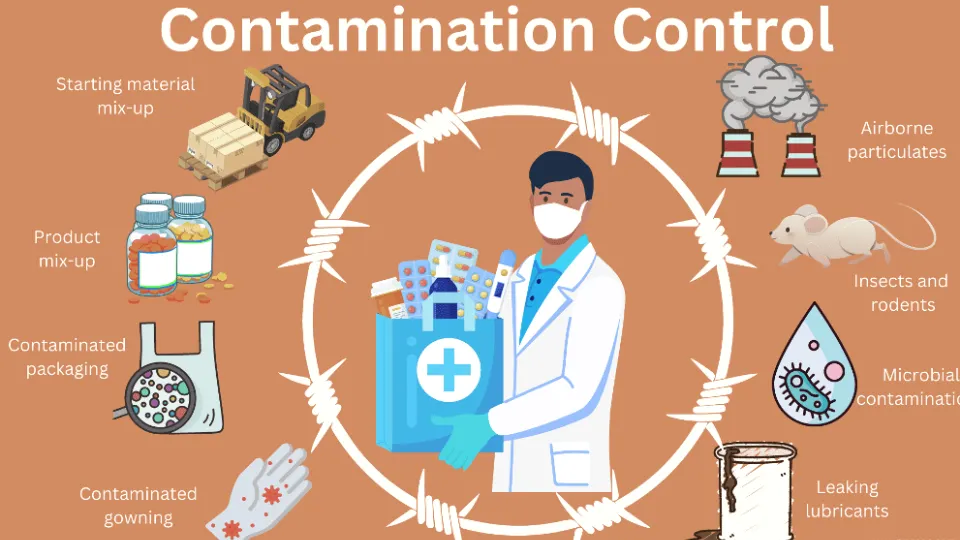
Contamination control is the set of measures a building or process uses to limit unwanted substances in air, on surfaces, or in products. From a ventilation perspective, it combines dilution, filtration, local exhaust, and pressure control to keep indoor pollutant levels within defined health, comfort, or process limits.
What is the meaning of contaminant?
A contaminant is any unwanted substance that reduces air quality, affects health, damages materials, or interferes with a process. In buildings, contaminants include particles, gases, vapors, bioaerosols, and moisture-related byproducts that ventilation and filtration systems must manage.
What are the 4 types of contaminants?
Many frameworks group contaminants into physical (dust and particles), chemical (gases and vapors), biological (bacteria, viruses, mold), and radiological or specialized process-related contaminants. Each group needs different control tools, but ventilation often contributes to controlling all four.
What are the benefits of contamination control?
Effective contamination control protects occupant health, improves comfort, and supports compliance with regulations or certifications. It also helps maintain equipment, reduce cleaning frequency, and protect sensitive processes or products from damage or failure due to poor air quality.
What is an example of a contaminant?
Examples include fine dust from outdoor pollution, solvent vapors from cleaning products, cooking smoke, welding fume, mold spores in damp areas, or bioaerosols released when people cough or speak. Each of these can affect indoor air quality if the building lacks adequate control measures.
How can you prevent contamination?
Prevention starts with source control, such as choosing low-emission materials and enclosing or capturing processes that generate pollutants. Ventilation then adds outdoor air, filtration, local exhaust, and pressure zoning to dilute and remove remaining contaminants. Regular maintenance and cleaning complete the strategy by stopping buildup over time.
About YAOAN VENTILATION
YAOAN VENTILATION delivers optimized air and airflow management solutions backed by nearly three decades of engineering experience. Since 1996, we have focused on industrial-grade ventilation and fire protection systems for commercial buildings, infrastructure, and specialized environments. Our product range includes fans, dampers, smoke control components, silencers, and precision-built aluminum ventilation parts engineered to integrate with filtration, local exhaust, and pressure-control strategies. By combining robust equipment with thoughtful contaminant-control design, YAOAN VENTILATION helps projects protect occupant health, support regulatory compliance, and maintain stable indoor air quality across the full system life.