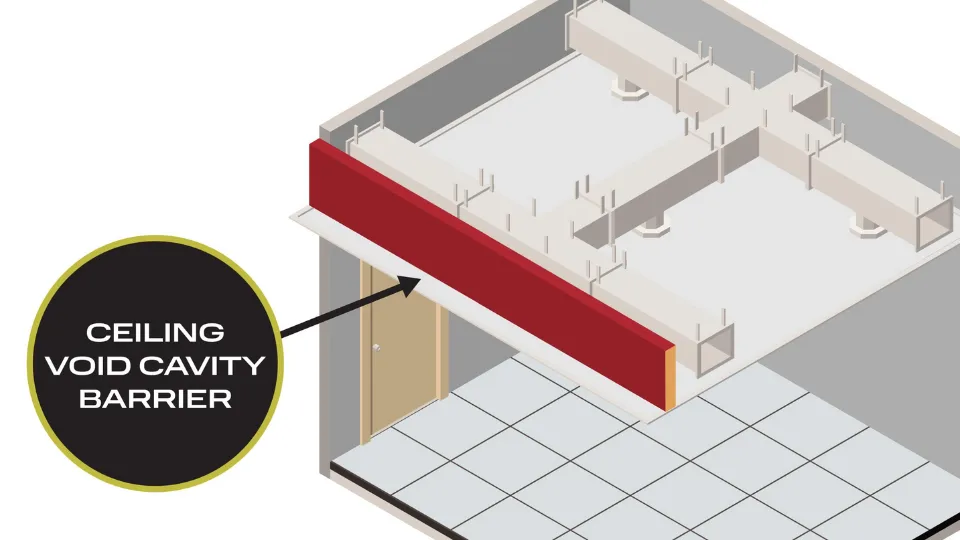
Above the Ceiling: A Hidden Part of the Ventilation System
Walk into a finished room and you see diffusers, grilles, and lights. Above the ceiling tiles, the real distribution work happens. The ceiling void carries ducts, cable trays, and sometimes even becomes part of the air path itself.
For HVAC designers, the space above the ceiling is not “leftover volume.” It functions as a technical zone that influences AIRFLOW CONTROL, fire performance, access, and hygiene across the building.
Ceiling Voids as Part of the Air Path
Plenums and static pressure spaces
Some projects treat the ceiling void as a return air plenum or as a static pressure box behind diffusers. In that case, the void:
- Collects return air from multiple grilles
- Provides a mixing zone before air enters return ducts or openings
- Helps even out pressure so diffusers deliver stable throw and noise levels
This approach can reduce duct quantities, but it also demands careful detailing of leakage, fire separation, and cleanliness.
Routing diffusers, ducts, and terminals
Even when the void does not act as a plenum, it still houses:
- Supply and return duct branches
- Flexible connections to diffusers and grilles
- Dampers, access doors, and balancing devices
Clear layout in the ceiling void keeps diffusers where designers intend, maintains throw patterns, and avoids sharp bends that create noise or excessive pressure drop. Coordination with lighting and sprinklers prevents congestion and makes later maintenance safer.
Fire Separation Inside the Ceiling Void
Understanding whether the void is a fire compartment
A ceiling void can sit on either side of a fire line:
- In some designs, the fire-resistance rating stops at the structural slab, and the suspended ceiling has no fire role.
- In other designs, the rated assembly includes the ceiling system, and the void becomes part of a protected or separated volume.
The fire strategy decides where FIRE SAFETY lines run. HVAC teams then align duct routes, dampers, and penetrations with that strategy.
Ducts, dampers, and barriers above the ceiling
Within the void, correct detailing protects compartmentation:
- Fire and smoke dampers sit at rated wall or shaft penetrations.
- Ductwork that crosses compartments follows rated duct or enclosure requirements.
- Gaps between walls and ceilings receive appropriate fire stopping.
Access doors in ducts and ceilings must allow inspection and testing of these devices. If the void becomes a return plenum, materials inside must also comply with relevant fire and smoke spread rules.
Cleanliness, Access, and Long-Term Operation
Dust, debris, and microbial growth
Because ceiling voids stay out of sight, they can accumulate:
- Construction debris and leftover packaging
- Dust and fibers from duct leakage or poor sealing
- Moisture around poorly insulated chilled-water lines or condensate leaks
Over time, these conditions raise hygiene concerns and can introduce extra particle load into the return airstream. A good O&M plan includes periodic checks of representative ceiling zones, especially near intakes, wet services, and known leakage points.
Access planning and safe entry
Safe, practical access depends on choices made during design:
- Sufficient access panels in ceilings, especially near dampers and control devices
- Clear working platforms or stable floor-level access in key plant corridors
- Labels on diffusers and panels that match drawings and BAS naming
During maintenance, teams should avoid standing directly on tiles or unstable framing. They also verify that any removed tiles return to their proper position to preserve airflow and acoustic behavior.
Design and Coordination Guidelines for Ceiling Voids
Early coordination with structure and architecture
The best ceiling voids emerge in the coordination phase, not during late-stage site improvisation. Helpful practices include:
- Defining a minimum clear height for services above the finished ceiling
- Reserving dedicated “highways” for main ducts and major cable trays
- Aligning bulkheads, beams, and downstands with diffuser layouts
This planning reduces sharp offsets and keeps airflow more efficient. It also supports easier installation and clearer access paths.
Balancing acoustics, energy, and maintainability
Decisions in the void affect other performance aspects:
- Exposed plenums influence sound paths between rooms.
- Excessive leakage in a plenum wastes fan energy and complicates balancing.
- Overcrowded voids limit access and encourage shortcuts during maintenance.
A balanced design treats the ceiling void as a controlled environment, not only a storage space for whatever does not fit elsewhere.
FAQ
What is a ceiling void?
A ceiling void is the space between a suspended ceiling and the structural slab or roof above. Designers use it to route services such as ducts, pipes, and cables. In some buildings, it also functions as a return air plenum or static pressure space for the ventilation system.
What does “void” mean in building?
In building terminology, a “void” is an empty or unoccupied space that forms part of the structure but does not serve as a regular room. Examples include ceiling voids, service voids behind walls, and open-volume atrium voids that connect multiple floors.
What does “roof void” mean?
A roof void usually describes the space between the top floor ceiling and the roof structure. Many people call it an attic. This zone often holds insulation, ventilation paths, and sometimes mechanical or electrical services, and it requires attention to fire, moisture, and access.
What is the meaning of ceiling in building?
The ceiling is the upper interior surface of a room, which hides structural elements and services from view. It can be a direct finish on the slab or a suspended system that creates a void above. The ceiling influences acoustics, lighting integration, and how the ventilation system delivers air to the occupied zone.
How to access a ceiling void?
Access usually comes through ceiling hatches, removable tiles, or dedicated access panels. Safe access means using proper platforms or ladders, avoiding walking on tiles, and respecting electrical and fall hazards. Maintenance teams rely on clear documentation to locate the correct panels for each device.
What does “void” mean on a property?
On property plans, “void” marks an area with no usable floor, such as space above a double-height lobby or an atrium cut-out. It can also indicate service voids or inaccessible zones. These spaces affect volume, views, and sometimes how ventilation and smoke control strategies work.
How to tell if a ceiling is going to cave in?
Warning signs may include sagging, visible cracks widening over time, water stains, unusual noises, or deformation around fixings. Any suspicion of structural or ceiling system failure calls for prompt investigation by qualified building professionals. Occupants should avoid the area until specialists assess the risk.
What does “void” mean?
In general language, “void” means an empty space or something lacking content. In construction and property, it refers to spaces that do not serve as regular occupied rooms but still influence structure, services, and environmental conditions.
About YAOAN VENTILATION
YAOAN VENTILATION delivers optimized air and airflow management solutions backed by nearly three decades of engineering experience. Since 1996, we have focused on industrial-grade ventilation and fire protection systems for commercial buildings, infrastructure, and specialized environments. Our product range includes fans, dampers, smoke control components, silencers, and precision-built aluminum ventilation parts designed to work reliably within ceiling voids, shafts, and plant spaces. By treating hidden zones like ceiling voids as engineered parts of the system, YAOAN VENTILATION helps projects maintain stable airflow, robust FIRE SAFETY separation, and clean, accessible service routes throughout the building life cycle.