Why Method Statements Matter in Ventilation Installation
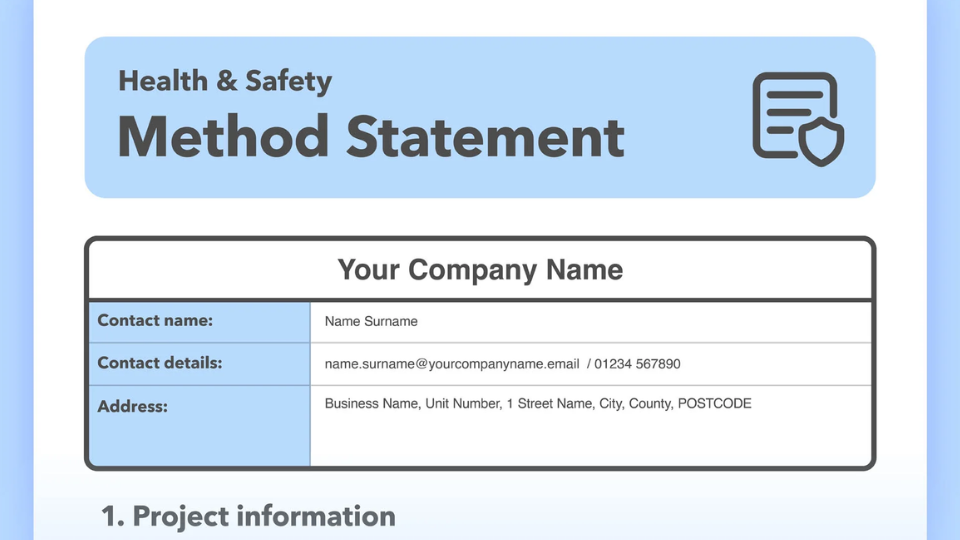
On a ventilation project, quality does not come from individual skills alone. It comes from a clear, repeatable method that every team member understands. A Method of Statement (MOS) provides that structure for fans, ductwork, and related HVAC components.
For ventilation equipment, a solid MOS:
- Reduces installation errors and rework
- Supports safe working practices around lifting, power, and rotation
- Gives consultants and clients a transparent view of how the contractor manages risk
- Protects long-term system performance and code compliance
When a company shares its MOS with a client, it also demonstrates a long-term commitment to safety, quality, and predictable delivery.
Core Elements of a Ventilation Installation MOS
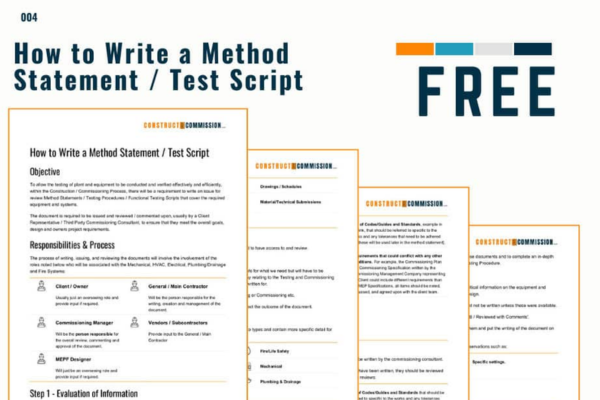
A good MOS feels practical to use on site. It also aligns with specifications and regulatory expectations. The sections below outline a typical structure that HVAC contractors can adapt.
Project context and defined scope
The document first sets the boundaries of the work:
- Project name, location, and HVAC package reference
- Names of client, main contractor, and HVAC contractor
- Drawings and specification sections covered by this MOS
- Ventilation scope (for example: supply fans, exhaust fans, inline fans, and local duct connections)
Clear scope language helps the team understand which tasks follow this specific method and which tasks follow separate procedures.
Roles, competence, and communication
An MOS gains strength when it links each activity to a responsible role:
- Project manager plans resources and coordinates with other trades.
- Site engineer or supervisor leads daily execution, toolbox talks, and quality checks.
- Safety officer monitors risk controls and site conditions.
- QC engineer verifies installation against drawings, checklists, and inspection points.
- Technicians and installers carry out the work and report any deviation from the method.
The MOS should also note how the team escalates technical questions, such as clashes with other services or discrepancies between drawings and site conditions.
Materials, tools, and manufacturer requirements
Before work starts, the document lists:
- Fan types, ratings, and approved manufacturers
- Flexible connectors, anti-vibration mounts, supports, anchors, and sealing materials
- Lifting gear, torque tools, measuring devices, and access equipment
- Required PPE for the specific tasks, such as fall protection or hearing protection
The MOS references the manufacturer’s installation manuals and states that the site team will follow them where they add detail beyond the generic method.
Example MOS: Installing a Roof Exhaust Fan
The following example focuses on a single piece of equipment: a roof-mounted exhaust fan that connects to internal ductwork. The same logic can extend to other fan types.
Planning and coordination
Before any physical work, the team:
- Reviews the approved shop drawings and coordination model for clashes and clearances.
- Confirms that the roof curb or support frame matches the fan’s base dimensions and weight.
- Checks access routes for safe lifting to the roof, including crane plans if required.
- Aligns sequence with roofing, electrical, and waterproofing trades so no one closes access too early.
This planning step prevents last-minute changes that can compromise both airflow and weather protection.
Installation sequence on site
A typical sequence looks like this:
- Mark the exact fan location on the roof according to drawings and survey points.
- Install or verify the curb, frame, and vibration isolators; confirm level and alignment.
- Position the fan with appropriate lifting equipment, keeping workers outside the load path.
- Fix the fan to the base with specified fasteners and torque values.
- Connect ductwork with flexible connectors that allow movement and limit vibration transfer.
- Seal all joints and roof penetrations to the required air leakage and weatherproofing standards.
- Coordinate the installation of local isolators and power wiring with the electrical team.
Throughout this sequence, the supervisor checks that access for maintenance, damper operation, and future replacement remains clear.
Pre-commissioning checks and documentation
Before formal testing and balancing, the team:
- Verifies correct rotation direction with a controlled test run.
- Checks for abnormal noise or vibration and adjusts alignment or isolators as needed.
- Confirms that guards, screens, and safety labels sit in the correct positions.
- Records fan tag numbers, locations, and power data for the commissioning report.
These steps close the loop between the MOS, the physical installation, and the final documentation that facility staff will rely on.
Linking MOS to Safety, Quality, and Compliance
A method statement does more than describe tasks. It connects daily work to the project’s safety and quality framework.
From a safety perspective, the MOS anchors:
- Risk assessment outputs, such as working at height, manual handling, and lockout/tagout
- Required permits for hot work or crane use
- Emergency routes and communication procedures
From a quality perspective, the MOS provides:
- Defined inspection points before ceilings or shafts close
- Acceptance criteria for supports, alignment, sealing, and labeling
- A checklist that the QC engineer can sign off and store in the project quality file
When clients see a well-structured MOS applied consistently across multiple sites, they gain more confidence in the contractor’s approach to ventilation and AIRFLOW CONTROL at scale.
FAQ
What is a method of statement MoS?
A Method of Statement (MOS) is a controlled description of how specific work will take place on a project. It outlines scope, responsibilities, sequence of activities, safety measures, and quality checks. In ventilation installation, the MOS shows how the team will handle equipment, connect ductwork, and support commissioning in a consistent way.
How to make a method of statement?
To develop a method of statement, start with the scope and reference documents, then map each work step from preparation to handover. Assign responsibilities, list required tools and materials, and describe safety and quality controls in clear language. Finally, review the draft with project and safety leaders so the document reflects real site conditions rather than generic text.
What are common mistakes in method statements?
Common mistakes include using templates that do not match the project, skipping task-specific hazards, and leaving roles unclear. Some method statements also overlook coordination with other trades or fail to connect steps to inspection and documentation. An effective MOS stays specific, practical, and aligned with actual drawings and site risks.
What is a method statement format?
A typical format includes sections for project details, scope, references, responsibilities, resources, step-by-step procedure, safety and environmental measures, quality control, and records. Many companies keep a standard layout so supervisors and auditors can find information quickly, while still allowing project teams to add detail for specialized systems.
What are the 7 steps of construction?
Different organizations group them in various ways, but one common view includes planning, design, procurement, site preparation, structural work, MEP and architectural installation, and testing and handover. Method statements support the MEP and installation step, where most ventilation equipment, ductwork, and controls enter the building.
What are the 5 steps of a risk assessment?
A five-step risk assessment often includes identifying hazards, deciding who may be harmed and how, evaluating risks and choosing controls, recording findings, and reviewing and updating the assessment. The MOS references these results and shows how the site team will apply the selected control measures during actual work.
What are the 5 stages of construction process?
A simple five-stage model covers initiation, design, procurement, construction, and operation. Ventilation method statements sit mainly in the construction stage, yet they also influence operation because they shape installation quality and the documentation that facility teams receive at handover.
What is the 3/4/5 method in construction?
The 3/4/5 method uses a triangle with sides in a 3:4:5 proportion to form a right angle, which helps crews check that layouts and corners stay square. Teams often apply it when setting out foundations, walls, or equipment bases. The same focus on simple, reliable checks appears throughout a good MOS for fan supports and duct alignment.
About YAOAN VENTILATION
YAOAN VENTILATION delivers optimized air and airflow management solutions backed by nearly three decades of engineering experience. Since 1996, we have focused on industrial-grade ventilation and fire protection systems for commercial buildings, infrastructure, and specialized environments. Our portfolio includes fans, fire dampers, smoke control components, silencers, and precision aluminum ventilation parts, each produced to strict national standards and supported by clear installation methods. By combining structured method statements with reliable equipment and technical support, YAOAN VENTILATION helps projects achieve safer execution, consistent quality, and long-term HVAC performance.